
What is a targeted resume? A complete guide

A targeted resume is a customised version of your CV tailored specifically to one job posting, designed to match the employer’s stated needs and pass the screening tools standing between you and an interview. Unlike a general resume sent to every vacancy, a targeted resume mirrors job description language, keywords, and priorities to signal that you are the right fit. This matters because 75% of large companies use Applicant Tracking System (ATS) software to filter applications before a human ever reads them. A generic resume rarely survives that filter. A targeted one is built to clear it.
What is a targeted resume and how does it differ from a general one?
A targeted resume highlights relevant skills and achievements aligned with one specific role, whereas a general resume is a fixed document reused across multiple applications. The difference is not about format. You can apply targeting to a chronological, functional, or hybrid resume. The change is in the content: what you include, what you cut, and how you phrase it.
A general resume tends to list everything you have done, hoping something sticks. A targeted resume is selective. It surfaces the experience most relevant to the role and frames it in the employer’s own language.

Here is how the two compare:
| Feature | General resume | Targeted resume |
|---|---|---|
| Content scope | Broad, covers full history | Focused on role-relevant experience |
| Language | Your own phrasing | Mirrors the job description |
| ATS performance | Low keyword match | High keyword match |
| Recruiter appeal | Requires interpretation | Immediately signals fit |
| Time to prepare | Quick to send | Requires tailoring per role |
The trade-off is clear. A general resume saves time upfront but costs you interviews. A targeted resume takes more effort per application but produces a far stronger result. The good news is that the effort reduces significantly once you have a master resume in place, which is covered in the next section.
How to create a targeted resume step by step
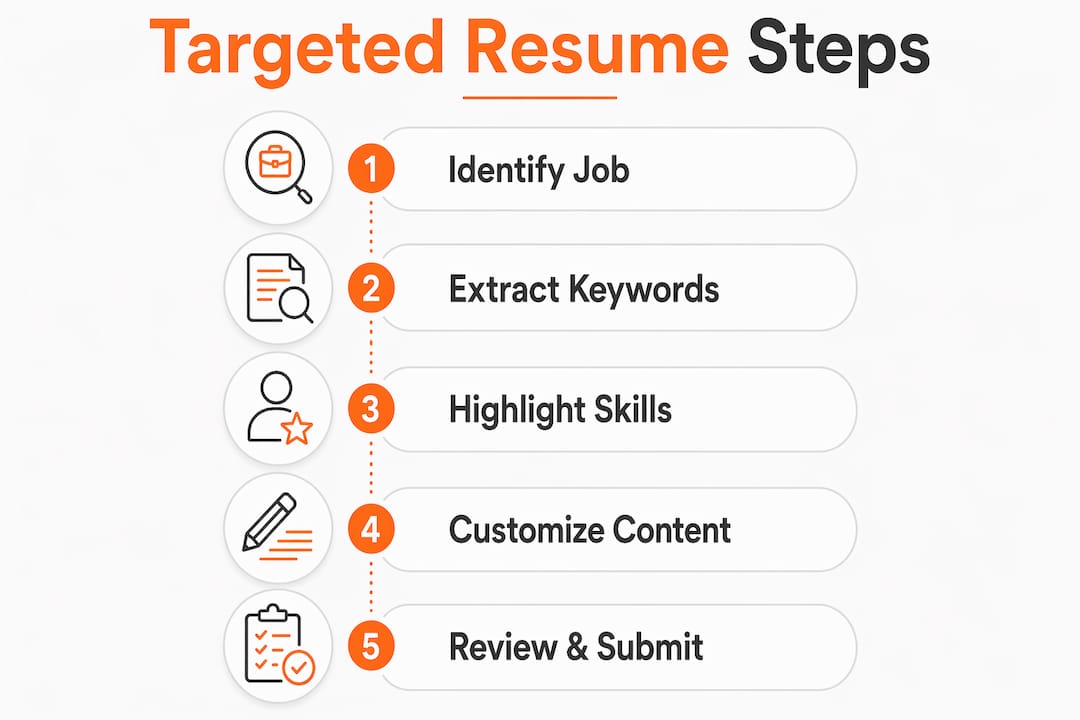
Creating a targeted resume does not mean rewriting your CV from scratch for every role. The most efficient method starts with building a master resume, a single document containing your complete professional history, every achievement, skill, and qualification you have ever held. You never send this document. You copy it and trim it.
Follow these steps:
- Build your master resume. Record every role, result, and skill in one document. The SparkCV career log is a practical tool for tracking and organising this history over time.
- Read the job description carefully. Identify the keywords, required skills, and priorities. Focus on sections labelled “Qualifications” and “What you’ll do,” as these contain the keywords ATS systems and recruiters scan for first.
- Copy your master resume. Never edit the original. Work from a copy so your full history stays intact.
- Prune and reorder. Remove experience that does not support this application. Move the most relevant roles and achievements to the top of each section.
- Mirror the job description language. If the posting says “stakeholder management,” your resume should say “stakeholder management,” not “client liaison.” Using the same keywords signals fit to both ATS software and the recruiter reading the shortlist.
- Describe achievements with outcomes. Use a simple structure: what you did, how you did it, and the measurable result. “Reduced onboarding time by 30% by redesigning the induction programme” beats “responsible for onboarding.”
- Proofread for alignment. Check formatting, grammar, and consistency. Confirm every key requirement from the job description appears somewhere in your resume.
Pro Tip: Keep a running list of the keywords from each job description you apply for. Over time, you will spot patterns across your target roles, making future tailoring faster and more precise.
This process turns what feels like a major task into a focused editing exercise. Most targeted resumes can be prepared in under 30 minutes once your master document is well maintained.
How do targeted resumes improve your chances with ATS?
ATS software works by scanning your resume for keywords and phrases that match the job description. If your document does not contain enough of the right terms, it is ranked low or filtered out before human review. The recruiter never sees it. This is the single biggest reason well-qualified candidates get no response.
The fix is direct: use the employer’s exact language. If the job description asks for “project management” and your resume says “programme coordination,” the ATS may not register a match even though the skills are equivalent. Precision in language is not pedantry. It is how you get past the first gate.
You can find the right keywords by reading the job posting closely, particularly the requirements and responsibilities sections. Look for repeated terms and phrases. Those repetitions signal what the employer values most. A CV tailoring checklist can help you work through this process systematically for each application.
Beyond ATS, targeted resumes also perform better with human reviewers. A recruiter spending 10 seconds on your CV will immediately see the alignment between your experience and their requirements. That clarity is what moves you from the maybe pile to the interview list.
Pro Tip: Paste the job description into a free word frequency tool to identify the most repeated terms. These are your priority keywords for that application.
Understanding why CVs get rejected before a recruiter reads them is the first step to making sure yours does not suffer the same fate.
Common misconceptions about targeted resumes
The biggest misconception is that creating a targeted resume means starting from scratch every time. It does not. The master resume method reduces tailoring from hours to minutes and prevents you from accidentally deleting important details you may need later.
A few other myths worth addressing:
- “My experience speaks for itself.” It does not, if the ATS never passes it to a human. Relevance must be made explicit, not assumed.
- “Targeting means exaggerating.” Targeting means selecting and framing. You are not inventing experience. You are presenting what you have in the most relevant way.
- “One strong resume is enough.” A single polished CV sent to 50 different roles will consistently underperform compared to 10 targeted applications sent to well-matched roles.
The challenge most people face is identifying which achievements to highlight and which keywords to prioritise. This gets easier with practice and with a well-organised master resume. The master resume approach also protects you from a common error: over-customising to the point where your CV becomes inconsistent or loses its professional coherence.
Pro Tip: Set a rule for yourself: never delete anything from your master resume. Only add to it. Your targeted versions are always copies, never the source.
Key takeaways
A targeted resume consistently outperforms a general one because it matches employer language, passes ATS filters, and signals fit to recruiters before they read a single line.
| Point | Details |
|---|---|
| Definition | A targeted resume is a customised CV tailored to one specific job posting. |
| Master resume method | Build one complete document and copy it for each application to save time and avoid errors. |
| ATS keyword matching | Mirror the job description’s exact language to pass automated screening filters. |
| Targeting any format | Chronological, functional, and hybrid resumes can all be targeted. |
| Proofreading matters | Check every targeted version for alignment with the role’s stated requirements. |
How SparkCV helps you tailor your CV faster
SparkCV is built for exactly this process. The platform analyses your existing CV alongside the job description, identifies keyword gaps, and generates a tailored version in minutes. You get a focused CV, a cover letter, and answers to application questions, all aligned to the role you are applying for.
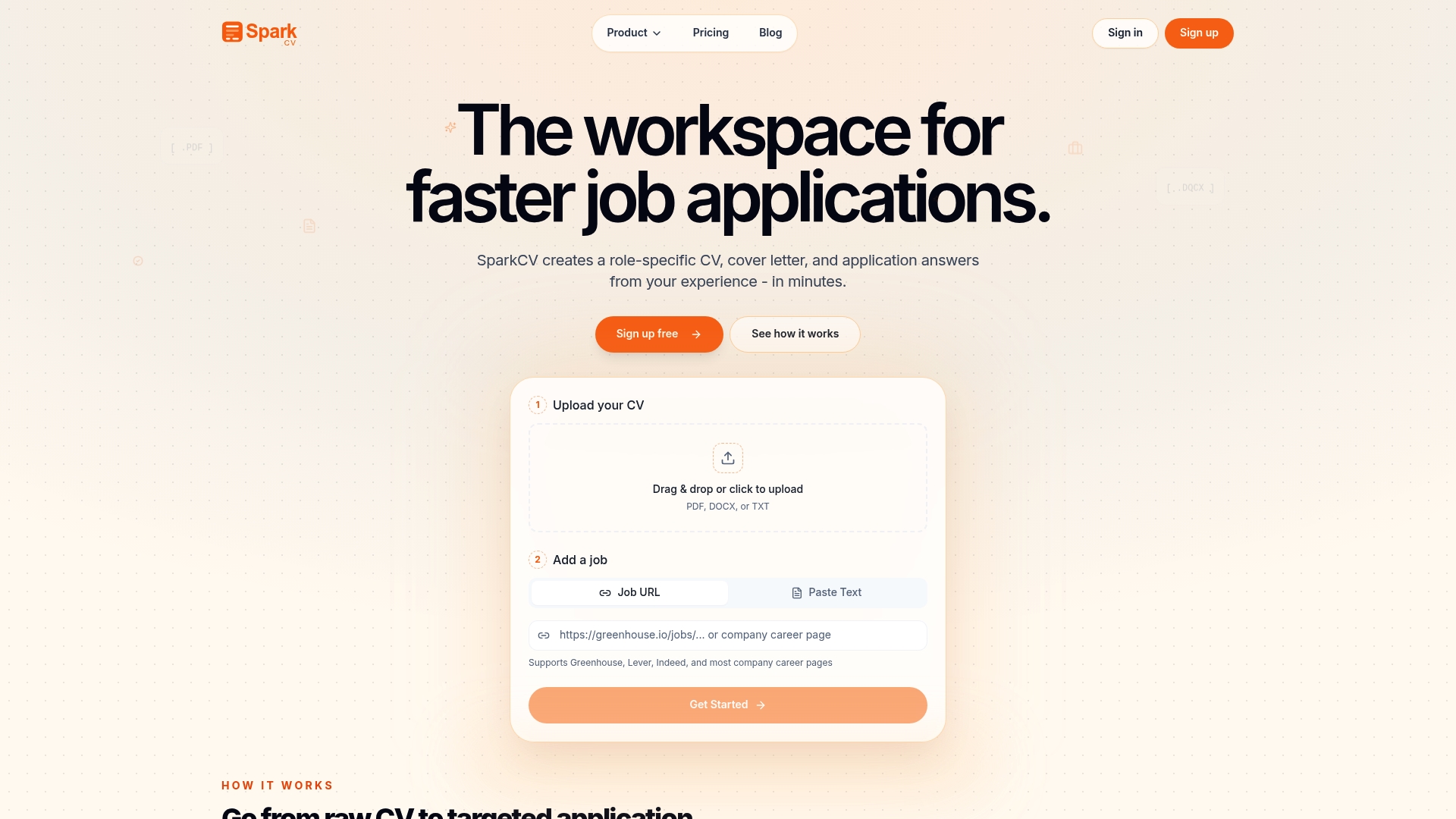
If you are applying to multiple roles and want each application to land with precision, SparkCV removes the manual effort from tailoring. The AI-powered CV tool handles the keyword matching and formatting so you can focus on the roles that matter. Sign up free and see how quickly a targeted application comes together.
FAQ
What is the main purpose of a targeted resume?
A targeted resume is designed to match one specific job posting by reflecting the employer’s language, required skills, and priorities. This improves both ATS performance and recruiter appeal.
How is a targeted resume different from a general one?
A general resume is reused across multiple applications with no changes. A targeted resume is customised for each role, selecting and framing experience to match what that specific employer needs.
Do I need to rewrite my CV for every job application?
No. The recommended approach is to maintain a master resume with your full history and copy it for each application, then prune and adjust the copy to fit the role.
What makes a resume ATS-friendly?
An ATS-friendly resume uses the exact keywords and phrases from the job description, avoids complex formatting that scanners cannot read, and clearly presents relevant qualifications in a structured layout.
How long does it take to create a targeted resume?
With a well-maintained master resume, most targeted versions take under 30 minutes to prepare. Tools like SparkCV can reduce this further by automating keyword matching and content alignment.
Recommended reads
Keep exploring






Hear more from SparkCV
Leave your email for new articles, onboarding invites, and launch news.
We’ll only use this for SparkCV emails, and you can unsubscribe any time.