
Reuse your CV across multiple applications the smart way

Use one master CV, a small set of core variants for each role family, and a five-minute tailoring pass for every job you apply to. This system beats both the single generic resume and the “rewrite everything from scratch” approach, because it separates the slow work (building your content) from the fast work (matching it to a posting).
The payoff shows up in three places. You apply faster because you’re editing, not creating. You pass more applicant tracking systems because your keywords match the posting rather than a generic template. And recruiters get a clearer story, because each version speaks directly to the role in front of them.
- Speed: cut per-application time from hours to minutes once your master CV exists
- ATS match: aligning wording to the job description raises your keyword score without inventing experience
- Clarity: a targeted title and summary tell a recruiter exactly why you’re a fit, faster than a generic one ever could
SparkCV builds this workflow into software, extracting your experience once and mapping it to each new job description. Job seekers already spend about an hour on average revising a resume before applying, so a repeatable system is what turns that hour into minutes.
Key Takeaways
Reusing a CV works best as a system: one master document, a small number of core variants per role family, and a short tailoring checklist for every application.
| Point | Details |
|---|---|
| Build once, reuse often | Create a master CV holding every fact and metric, then draw variants from it instead of rewriting from scratch. |
| Limit core versions | Keep two or three core CVs maximum, one per genuinely different role family. |
| Tailor in minutes | Update the title, summary, two to four bullets, and one or two keywords for each posting. |
| Respect ATS records | Apply only to closely related roles at one employer and reapply only after a material change. |
| Automate at volume | SparkCV extracts your experience and maps it to job descriptions for fast, ATS-friendly exports. |
Table of Contents
- When do you need multiple core CVs instead of one?
- How do you build a master CV system for fast reuse?
- What’s the fastest way to tailor a CV for one job?
- How do ATS systems handle repeat applications to one employer?
- Which tools actually make CV reuse scalable?
- Scale your applications without losing accuracy
- Sources
When do you need multiple core CVs instead of one?
A core CV is a complete, polished version built for one role family, such as “Project Manager” or “Data Analyst.” One-off tailoring is a light edit you make to a core CV for a specific posting. Confusing the two is where most job seekers waste time, either rebuilding from scratch every time or forcing one CV to cover jobs that have nothing in common.
Run through this checklist before you start a new core version:
- Are you applying to roles with materially different titles, skills, or seniority (manager versus individual contributor)?
- Are you changing industries or making a career pivot where your story needs a different frame?
- Have you noticed the same one or two edits repeating across five or more applications? That’s a sign you need a dedicated core version, not a workaround.
If none of those apply, tailor your existing core CV instead of building a new one.
Pro Tip: Cap yourself at two or three core CVs. Beyond that, you’re maintaining documents instead of applying for jobs.
Building a new core CV usually takes 45 to 60 minutes once you have a content library to pull from. That investment pays back within your first three or four applications to that role family.
How do you build a master CV system for fast reuse?
Treat your CV as a database first, a document second. The master CV holds every verifiable fact, metric, and achievement you might ever use. Individual variants are just filtered views of that same information.
- Build the master CV. List every role, project, and achievement with numbers attached (revenue, team size, percentage improvement, timeline). Nothing gets cut here, only added.
- Break it into a content library. Group bullets by skill (leadership, technical, sales), by achievement type (cost saving, process improvement, growth), and by project. This is what SparkCV’s career log is built to store, so you’re not hunting through old documents for a stat you used two years ago.
- Set canonical fields. Decide the exact wording for your professional summary, your top five bullets, and your default job title, so every variant starts from the same trusted baseline rather than a slightly different draft each time.
- Assemble variants from the library. Pull the bullets and framing that fit a given role family into a new core CV, rather than rewriting sentences from memory.
Keep version control simple:
- File naming:
[YourName]_[RoleFamily]_[Version].pdf, e.g.JSmith_ProjectManager_v2.pdf - One master document, stored separately from anything you actually send
- A short changelog noting what metric or bullet you last updated and when
Centralising facts this way means every number stays consistent across every CV you send. No recruiter should ever see two different figures for the same achievement.
What’s the fastest way to tailor a CV for one job?
This is the part you’ll repeat dozens of times, so it needs to be quick and mechanical. Once you have a core CV ready, tailoring for a specific posting should take five to ten minutes, not an hour.
- Read the job description once, then scan it again for repeated words. Pull out four to six keywords or responsibilities that appear more than once, these are usually the ones the employer, and the ATS, care about most.
- Update your target title. Match the exact job title from the posting where it genuinely reflects your experience.
- Rewrite your one-sentence summary. Swap in the top two priorities from the posting, using the employer’s own phrasing where it fits naturally.
- Reorder two to four bullets. Move the achievements most relevant to this posting to the top of each role. Order matters more than most job seekers realise, because recruiters skim.
- Insert one or two missing keywords. Only where they’re true to your experience. Never add a skill you don’t have just to pass a filter.
- Export and check the file. Confirm the filename is clear, the PDF retains a selectable text layer (not a flattened image), and the file size stays reasonable.
Most of the measurable benefit comes from exactly this kind of small, targeted edit set rather than a full rewrite, according to career advice sources across the industry.
Pro Tip: Keep a running list of the keywords you add most often for a given role family. After ten applications, you’ll already know which four or five terms matter most, and tailoring drops to under five minutes.

How do ATS systems handle repeat applications to one employer?
Applicant tracking systems such as Workday, Greenhouse, and Lever typically store one candidate record per person, not one record per application. Every resume you submit to that employer lands in the same file, which means a scattershot approach can work against you rather than for you.
| Behaviour | What it means for you |
|---|---|
| Single merged profile | Multiple submissions to unrelated roles can make your record look unfocused rather than versatile |
| Duplicate detection | Resubmitting the same posting without a meaningful change can flag your application rather than boost it |
| Overwrite on reapply | A new upload often replaces the old one, so recruiters may only see your most recent version |
Follow three rules of thumb for a single employer:
- Apply only to roles that are genuinely related to each other, not every open req you’re vaguely qualified for.
- Reapply only after a material change, a new certification, a role reposted after months, or a significant achievement, not simply because you didn’t hear back.
- If you spot an error after submitting, email the recruiter directly rather than resubmitting the whole application.
ATS platforms usually keep one profile per applicant, so treat every submission as an edit to that one record, not a fresh start.
Which tools actually make CV reuse scalable?
A basic do-it-yourself setup works fine at low volume: one master document, a “snippet deck” of reusable bullets sorted by skill, a spreadsheet tracking company, role, file name, and date, and a consistent naming convention. That combination alone catches most duplicate or conflicting submissions before they happen.
It stops scaling once you’re applying to ten or more roles a week, targeting several different role families at once, or running out of time to manually match keywords for every posting. That’s the point to consider an automated tailoring tool instead of another spreadsheet column.
- SparkCV extracts your experience from an existing CV once, so you’re not re-entering the same facts for every variant
- It maps that experience against each job description to prioritise the right bullets and keywords automatically
- Exports come out in ATS-friendly formats, avoiding the flattened-image problem that trips up so many otherwise strong applications
- A built-in change log tracks what was tailored for which employer, solving the version-control problem manually
Pro Tip: If you’re applying to more than one role family, keep a separate SparkCV-generated core CV per family rather than tailoring one all-purpose version six different ways.
Scale your applications without losing accuracy
Manually rebuilding a CV for every posting is the single biggest time sink in a job search, and it’s also where accuracy slips, numbers get out of sync, bullets go stale, keywords get missed entirely.
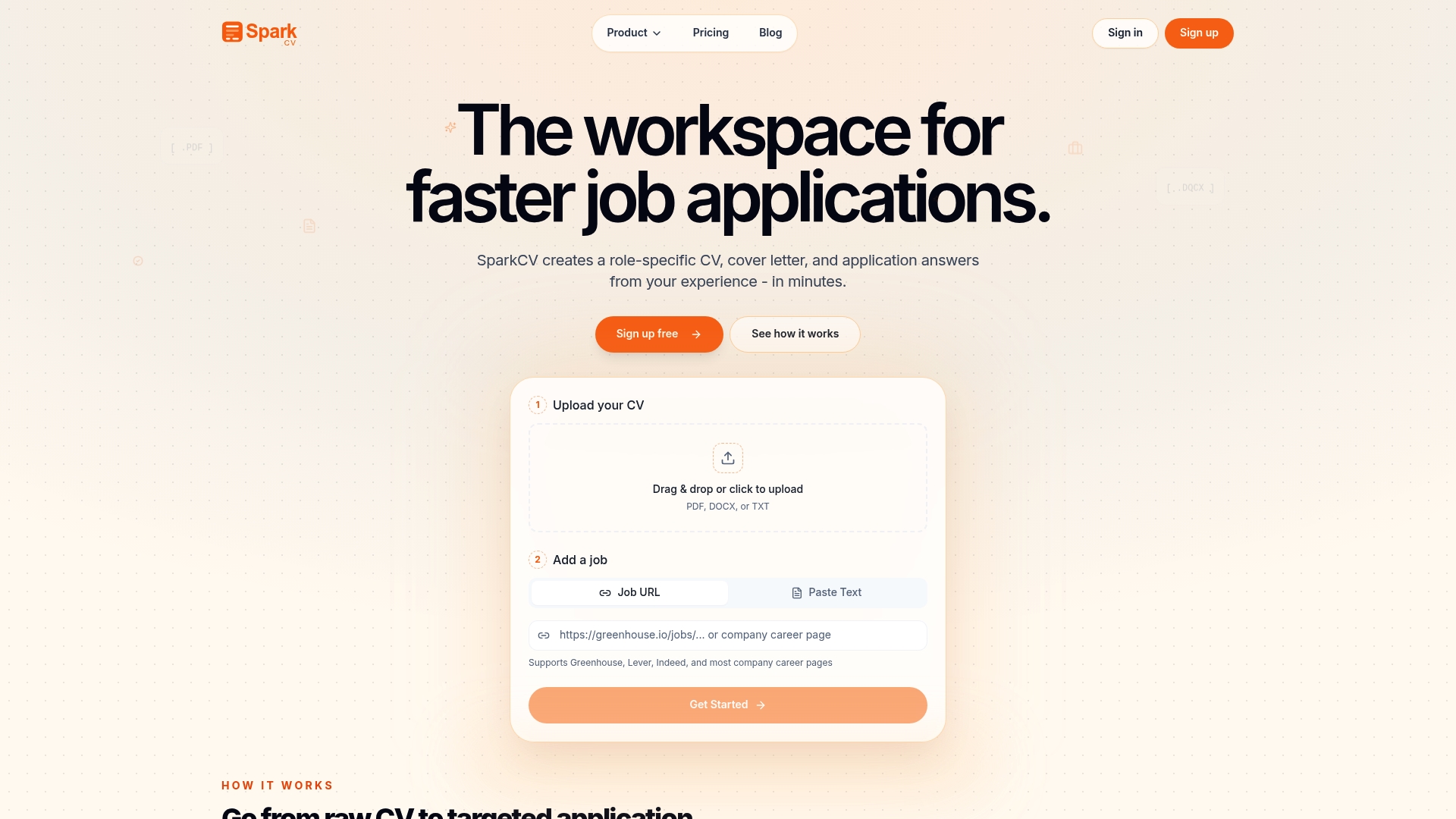
SparkCV is built around exactly the master CV plus rapid tailoring approach this article describes. Upload your existing CV once, and the extraction engine pulls out your experience, metrics, and skills into a structured profile you can draw from for every application. Paste in a job description, and SparkCV maps your existing content against it, surfacing the keywords and responsibilities worth prioritising, then generates a tailored CV in an ATS-friendly export.
This suits high-volume applicants targeting several role families at once, career changers who need distinct core versions for different industries, and anyone who simply doesn’t have an evening free to rewrite a resume from scratch. The platform also generates matching cover letters and tailored answers to application questions, and its career log keeps your achievement library current so nothing gets lost between applications.
If your current process is one CV stretched across every job you apply to, start by uploading it to SparkCV and see how a single job description reshapes it in minutes.
Sources
Recommended reads
Keep exploring






Hear more from SparkCV
Leave your email for new articles, onboarding invites, and launch news.
We’ll only use this for SparkCV emails, and you can unsubscribe any time.