
CEO resume for senior leaders: UK guide

A strong CEO resume is a metrics-first, two-to-four page leadership narrative that opens with a concise value proposition and three to six quantifiable achievements. That is the single most useful thing to know before you write a word. Your immediate next step: pick one target role, then extract your six greatest career wins and tailor each one to the mandate that role requires. Indeed’s guidance on CEO resumes confirms that an achievements-first approach, a professional profile at the top, and a multi-page format are what separate a board-ready executive CV from a standard one. Page Executive’s 2026 executive CV advice adds that an integrated personal brand statement and quantified clarity are what make senior candidates stand out to search firms and boards alike.
Key takeaways
A board-ready CEO resume is a metrics-first, two-to-four page leadership narrative with a targeted executive profile, six quantified achievements, and role-specific keyword alignment — produced once as a master document and tailored quickly for each mandate.
| Point | Details |
|---|---|
| Lead with your greatest hits | Place four to six quantified achievement statements on page one, before detailed role entries. |
| Use the four-part bullet formula | Structure every bullet as: Mandate + Context + Action + Measurable Outcome to prevent hollow claims. |
| Keep two file formats | Save a clean .docx for ATS portals and a polished PDF for direct board or headhunter delivery. |
| Tailor for each UK context | Shift which achievements lead and which vocabulary you use for FTSE/PLC, PE, scale-up, and interim roles. |
| SparkCV speeds up tailoring | Upload your CV and a job description; SparkCV generates a targeted, ATS-friendly version with matching cover letter in minutes. |
Table of Contents
- What should a CEO resume include, and in what order?
- How do you write impact bullets that quantify strategic outcomes?
- How should you format a CEO resume for ATS and boardroom readers?
- What keywords and phrases do UK headhunters look for in a CEO profile?
- How do you tailor a CEO resume for different UK contexts?
- Three CEO resume templates with copy-ready bullets
- Common CEO resume mistakes and a pre-send checklist
- What do boards and search firms prioritise for CEOs in 2026?
- SparkCV makes tailoring your CEO CV faster and more precise
- Sources
What should a CEO resume include, and in what order?
Structure matters more at the CEO level than at any other. Boards and headhunters spend seconds on a first pass, so page one must carry your entire value proposition. Here is the recommended section order:
- Header — full name, location (city and country), phone, professional email, LinkedIn URL
- Executive profile — three to five lines: who you are, the scale you have operated at, and the value you bring next
- Employment snapshot — a brief reverse-chronological list of titles, organisations, and dates (no bullets here; this is a quick orientation device)
- Key assets / greatest hits — four to six achievement statements, each with a metric; this is your “board-ready highlights reel”
- Professional experience — full role entries: mandate context, then three to five impact bullets per role
- Board roles and governance — NED positions, committee memberships, regulatory experience
- Education and executive development — degrees, MBA, INSEAD or IMD programmes, professional qualifications
- Additional leadership roles — advisory boards, industry bodies, trusteeships
- References — “Available on request” or two named referees if the role requires it
Three executive profile templates
Turnaround CEO Growth/scale CEO Interim/NED track Page one should carry sections 1 through 4 in full, and the opening of section 5. Detailed role entries, board positions, and education sit on subsequent pages.
How do you write impact bullets that quantify strategic outcomes?
The single biggest weakness in senior management resumes is the activity bullet: “Led a strategic review of the operating model.” That tells a board nothing. What they need is mandate, context, action, and a measurable outcome in one tight sentence.
Before and after examples
| Weak (activity) | Board-ready (impact) |
|---|---|
| Led a cost reduction programme across the group | Delivered annualised savings representing 18% of cost base over 14 months by consolidating five operating divisions into two |
| Managed relationships with key investors | Rebuilt investor confidence post-profit warning; share price recovered 34% within six months of new capital allocation strategy |
| Oversaw digital transformation | Migrated customers to a new digital platform in 11 months, reducing cost-to-serve by 22% and lifting NPS by 19 points |
| Grew the business internationally | Entered three new markets (UAE, Singapore, Poland), contributing £28m incremental revenue in year two |
| Improved company culture | Reduced voluntary attrition from 31% to 14% in 18 months through a leadership development programme |
Metric formula guidance
Choose your denominator deliberately. Revenue growth reads better as a percentage when the base is large; in absolute terms when the number is impressive on its own. Use:
- Revenue growth: £X to £Y (Z% CAGR over N years)
- Margin expansion: EBITDA margin from X% to Y% over N months
- Cost reduction: £Xm annualised savings representing Y% of cost base
- Value creation: enterprise value from £Xm to £Ym at exit (Zx MOIC)
- Efficiency: cost-to-serve reduced by X%, headcount productivity up Y%
Pro Tip: Use the formula: Mandate + Context + Action + Measurable Outcome. “As incoming CEO of a loss-making £200m retailer (mandate/context), restructured the buying and logistics functions (action), returning the business to profitability within 12 months and achieving a £45m EBITDA swing (outcome).” That four-part structure prevents hollow claims and gives the reader everything they need to assess your impact.
How should you format a CEO resume for ATS and boardroom readers?
Senior candidates often assume boards read every word. In practice, your CV passes through an ATS or a search firm’s database before it reaches a human. You need it to work in both environments.
Length and layout
For UK roles, two pages is appropriate for candidates with under 15 years of CEO-level experience. Three to four pages is standard for those with multiple mandates, board roles, and international scope, which Arielle Executive’s CEO resume examples confirm is the norm for senior executive CVs. Never go beyond four pages; anything longer signals an inability to prioritise.
Layout dos:
- Use a clean, single-column or two-column header layout with 11pt or 12pt serif or sans-serif font (Garamond, Calibri, or Georgia)
- Set margins at 1.9cm to 2.5cm; white space is a readability signal at board level
- Use bold for role titles and organisation names; italics for mandate context lines
- Keep section headings consistent and unambiguous (avoid creative labels like “My Story”)
Layout don’ts:
- No photos on a UK CV (standard practice; photos are expected on LinkedIn, not the document)
- No graphics, charts, or infographics inside the CV body — ATS systems cannot parse them
- No tables with merged cells; they break in most ATS parsers
- No headers or footers containing key contact information — ATS often strips them
ATS checklist
- Place keywords from the job description in the executive profile and the first bullet of each role
- Label sections with standard terms: “Professional Experience”, “Education”, “Board Roles” — not synonyms
- Save the ATS version as a .docx file; name it
FirstName-LastName-CEO-CV.docx - Save the board/recruiter version as a PDF; name it identically with a
-Boardsuffix - Avoid text boxes, columns in the body, and embedded images
Pro Tip: Keep two master files: a clean .docx for ATS submission and a polished PDF for direct board or headhunter delivery. The PDF can use a refined two-column header and subtle design touches; the .docx should be plain, single-column, and fully parseable. Never send the designed PDF to an online application portal.
What keywords and phrases do UK headhunters look for in a CEO profile?
Keyword relevance determines whether your CV surfaces in a search firm’s database query. These are the buckets that matter for UK CEO searches in 2026:
Strategic leadership P&L ownership, board-level accountability, enterprise strategy, organisational design, succession planning, executive team leadership

P&L and value creation Revenue growth, EBITDA improvement, margin expansion, capital allocation, enterprise value, return on invested capital (ROIC), shareholder value
Transformation and change Business transformation, operating model redesign, post-merger integration, turnaround, restructuring, change management
Governance and stakeholder management Corporate governance, audit committee, remuneration committee, investor relations, regulatory compliance, FCA, PRA, Companies Act
International expansion Market entry, cross-border M&A, international P&L, global operations, geographic expansion, joint ventures
ESG and sustainability Net zero strategy, ESG reporting, sustainability governance, TCFD, social value, stakeholder capitalism
Digital transformation Digital strategy, technology-led growth, AI adoption, data-driven decision-making, platform business models, digital operating model
Sample profile opening lines by context
- FTSE/PLC: “FTSE 100 CEO with 25 years of board-level P&L accountability across consumer goods and retail, with a consistent record of shareholder value creation and governance excellence.”
- Private equity: “PE-backed CEO with three successful exits (combined enterprise value £1.4bn). Specialist in buy-and-build strategies, 100-day planning, and EBITDA-to-exit value creation.”
- Scale-up: “Founder-to-CEO with a track record of scaling technology businesses from seed to Series C. Experienced in building high-performance teams, securing institutional funding, and entering new markets at pace.”
To map job description language to your CV, copy the role’s key phrases into a document, then check each one appears at least once in your profile or first bullet. SparkCV’s CV tailoring checklist walks through this process step by step for 2026 applications.
Presenting leadership and soft skills alongside hard metrics strengthens a profile, particularly for governance-heavy roles where stakeholder management and cultural leadership carry real weight.
How do you tailor a CEO resume for different UK contexts?
One master CV, four targeted versions. The structure stays the same; what changes is which achievements you surface first and the language you use to frame them.
FTSE/PLC boards prioritise governance credentials, shareholder value creation, and regulatory track record. Lead with board committee experience, investor relations wins, and any experience with the UK Corporate Governance Code. Tone: measured, precise, institutional.
Private equity audiences want to see EBITDA growth, MOIC, 100-day plans, and exit readiness. Quantify every value-creation lever. Drop governance language in favour of commercial metrics. Tone: direct, commercial, results-focused.
Scale-up and venture-backed roles reward speed of execution, fundraising experience, and team-building at pace. Highlight ARR growth, funding rounds closed, and key hires made. Tone: energetic, growth-oriented, founder-friendly.
Interim and NED mandates call for breadth over depth. Surface the range of sectors, the speed at which you delivered, and your ability to add value without full executive authority. Governance signals (committee memberships, regulatory experience) carry extra weight here.
To adapt your master CV quickly:
- Identify the three achievements most relevant to the target context
- Move them into the “Key Assets / Greatest Hits” section at the top
- Swap profile language to match the audience’s vocabulary (shareholder vs investor vs founder)
- Check that every keyword in the job description appears at least once in the first half of the CV
Rewriting your CV from scratch every time is the real problem — a well-structured master document makes targeted versions a 20-minute task, not a day’s work.
Three CEO resume templates with copy-ready bullets
Conservative FTSE/PLC template (page one priorities)
Lead with: governance credentials, shareholder value, regulatory experience, board committee roles. Open the profile with tenure, scale of P&L, and a specific value-creation outcome.
Private equity value-creation template (page one priorities)
Lead with: EBITDA at entry vs exit, MOIC, 100-day plan delivery, and deal experience. Name the PE house if it is well-known; it signals credibility to the next investor audience.
Growth/scale-up CEO template (page one priorities)
Lead with: ARR or revenue at entry vs exit, funding rounds, headcount growth, and market expansion. Include the names of co-investors or advisors if they add credibility.
Copy-ready bullets by theme
Revenue growth
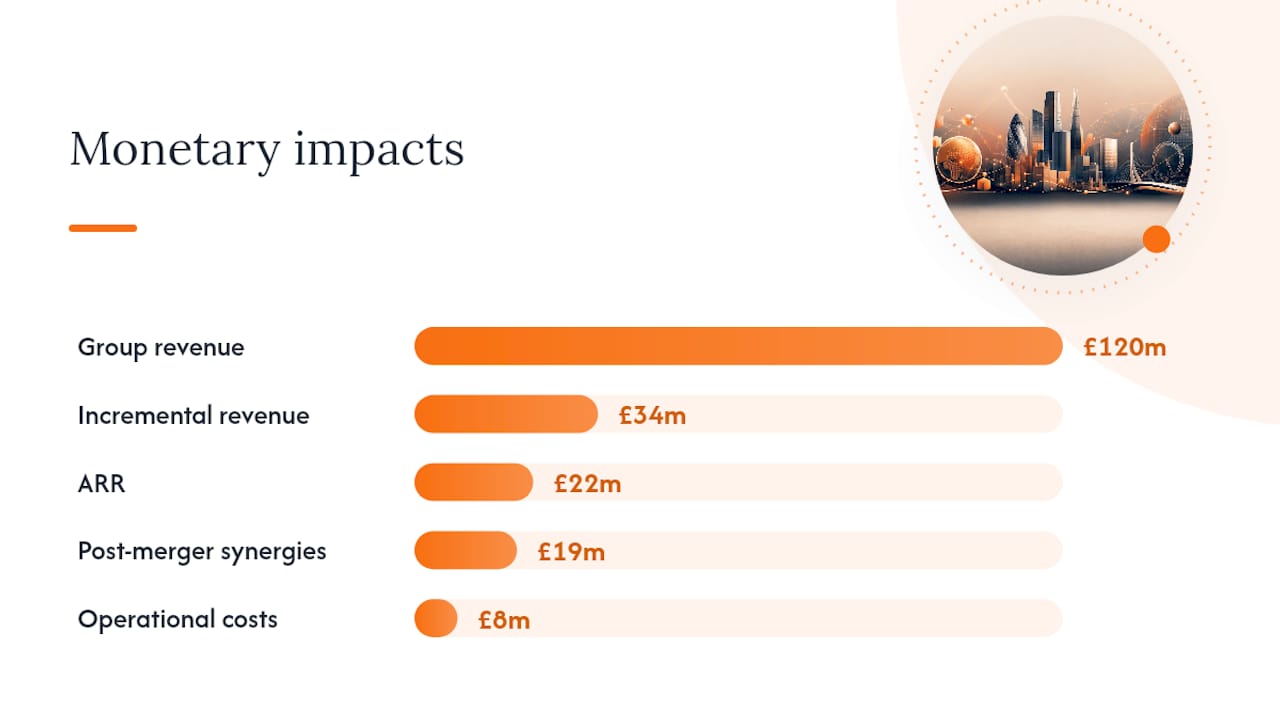
- Grew group revenue from £45m to £120m over four years through organic expansion and two bolt-on acquisitions
- Achieved 38% ARR growth year-on-year for three consecutive years, reaching £22m ARR ahead of Series B close
Turnaround
- Returned a loss-making £300m division to profitability within 18 months, delivering a £52m EBITDA swing
- Reduced net debt from £180m to £60m in 30 months through asset disposal, working capital discipline, and refinancing
Margin expansion
- Expanded gross margin from 31% to 44% by exiting low-margin contracts and repricing the core product suite
- Improved EBITDA margin from 6% to 17% through supply chain consolidation and a zero-based budgeting programme
International expansion
- Entered five new markets across APAC and MENA within 36 months, generating £34m incremental revenue
- Led acquisition and integration of a German competitor, adding €28m revenue and accelerating EU market share
M&A and integration
- Completed six acquisitions (combined EV £420m) and integrated all within 12 months without revenue disruption
- Delivered post-merger synergies of £19m against a target of £14m, 18 months ahead of schedule
Digital transformation
- Migrated a legacy ERP system across 14 sites in 10 months, reducing operational costs by £8m annually
- Built a data platform serving 2.4m customers, cutting customer acquisition cost by 27% within 12 months
Culture and governance
- Introduced a group-wide ESG framework aligned to TCFD, achieving a 40% reduction in Scope 1 and 2 emissions over three years
- Rebuilt executive team following a governance crisis; all four new appointments retained beyond three-year tenure
Pro Tip: Map each bullet to a KPI the target role’s job description mentions. If the JD references “digital operating model”, your digital transformation bullet should use that exact phrase. Keyword alignment at bullet level is what gets a CV shortlisted from a database search.
Common CEO resume mistakes and a pre-send checklist
The most common errors at senior level are not typos. They are structural and strategic.
Red flags that stop boards reading:
- Vague claims without scale — “Transformed the business” with no metric, no timeframe, and no mandate context
- Missing mandate context — a reader cannot assess an achievement without knowing the size, sector, and state of the business when you arrived
- Operational minutiae — listing day-to-day management tasks rather than strategic outcomes; HBR’s research on CEO time use confirms that boards expect strategic wins, not operational logs
- Inconsistent dates — gaps or overlaps that raise questions; account for every period, even if briefly
- Generic profile statements — “A results-driven leader with excellent communication skills” tells a board nothing
- No governance signals — for any UK PLC or regulated role, the absence of board committee or regulatory experience is a gap
Before-you-send checklist:
- [ ] File saved as both .docx (ATS) and PDF (board/recruiter)
- [ ] Filename includes your name and “CEO-CV”
- [ ] Executive profile is role-specific, not generic
- [ ] Every bullet has a metric, a timeframe, or a scale indicator
- [ ] Mandate context appears at the start of each role entry
- [ ] Board roles and governance section is present and complete
- [ ] Education section includes executive development programmes (MBA, INSEAD, IMD)
- [ ] LinkedIn URL in the header matches the CV’s content and dates
- [ ] References section present (even if “available on request”)
- [ ] No photos, graphics, or text boxes in the ATS version
Understanding why CVs get rejected before they are read helps you avoid the formatting traps that eliminate strong candidates before a human ever sees the document.
What do boards and search firms prioritise for CEOs in 2026?
Three authoritative sources converge on the same point: boards want evidence of judgment under pressure, strategic prioritisation, and forward-looking value creation — not a list of responsibilities.
IMD’s crisis management research makes clear that boards expect CEOs to demonstrate crisis preparedness and decision frameworks as core credentials. This means your CV should include at least one bullet that shows how you led through a specific crisis: a profit warning, a regulatory intervention, a supply chain failure, or a reputational event. Frame it as: situation, decision framework, outcome.
“Boards increasingly screen for crisis-readiness and stakeholder management as part of a CEO’s core credentials. CVs that surface evidence of decision frameworks and outcomes under pressure carry significantly more weight than those that list only growth achievements.” — IMD blog, What is crisis management?
HBR’s analysis of how CEOs manage time shows that top executives concentrate on strategic priorities and delegation. The CV implication is direct: remove operational detail and replace it with strategic outcomes. If a bullet describes something a direct report could have done, cut it.
Forbes Coaches Council advises that CEO résumés should convey a forward-looking mindset and anticipate what the next employer needs, not only catalogue past duties. Your profile statement should close with a sentence about where you are going next and the value you will create in that role, not just where you have been.
CV implications:
- Add one crisis or high-stakes decision bullet per major role
- Frame achievements with a time horizon (12 months, three years, at exit) to show strategic patience
- Include governance signals: committee memberships, regulatory interactions, investor communications
- Close the executive profile with a forward-looking sentence tied to the target role’s mandate
SparkCV makes tailoring your CEO CV faster and more precise
Producing four targeted versions of a senior executive CV — FTSE, PE, scale-up, interim — used to mean hours of rewriting the same achievements in different language. SparkCV cuts that to minutes.
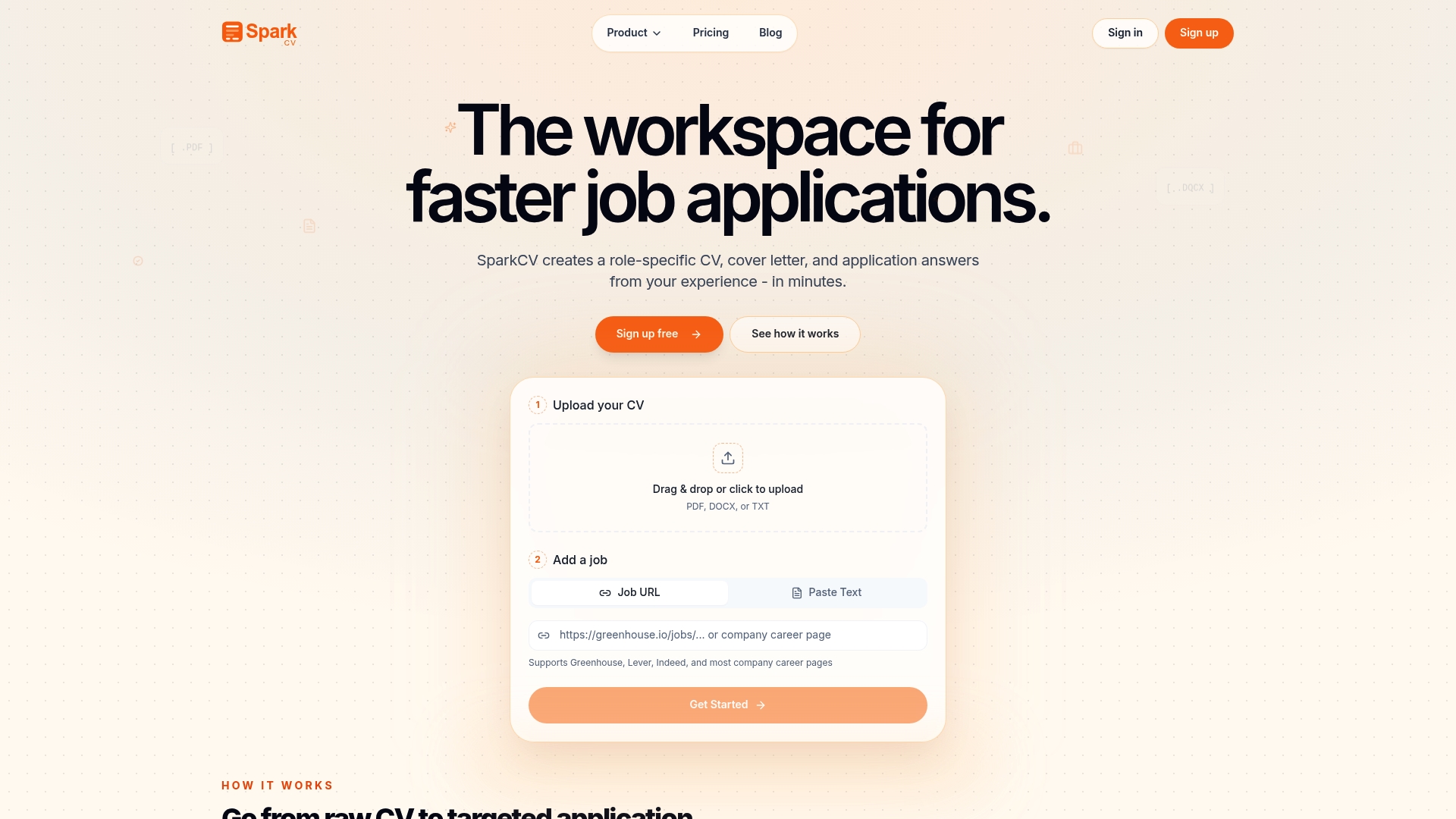
Upload your existing CV and the job description, and SparkCV’s AI extraction engine identifies which of your achievements align with the role’s mandate, surfaces the right keywords, and generates a tailored, ATS-friendly version ready to export. You get a board-quality PDF and a clean .docx for portal submissions — both formatted to the standards this guide describes. The career log feature lets you build and store your full achievement library, so every bullet you have ever written is available to pull into the next targeted version. Cover letters and tailored answers to application questions are generated alongside the CV, keeping your entire application consistent.
Senior candidates who want a polished, role-specific executive CV without starting from a blank page can get started with SparkCV today.
Sources
- How CEOs manage time | Harvard Business Review
- What is crisis management? | IMD blog
- Navigating The Future: Craft A CEO Résumé That Stands Above The Rest | Forbes
A professional headshot aligned to your CV’s personal brand strengthens your LinkedIn profile and the overall impression you make on search firms; this guide on why CEOs need professional headshots explains the practical and reputational case for investing in one.
Recommended reads
Keep exploring






Hear more from SparkCV
Leave your email for new articles, onboarding invites, and launch news.
We’ll only use this for SparkCV emails, and you can unsubscribe any time.