
What is a graduate cover letter? A complete guide

A graduate cover letter is a personalised, brief written message submitted alongside your CV that explains why you want a specific role and why you are a strong fit for it. In professional practice, this document is also called a job application letter or covering letter. For recent graduates, it serves as your first direct conversation with an employer, translating your academic background and extracurricular experience into terms that matter to a hiring manager. A well-written graduate cover letter does not repeat your CV. It adds context, shows motivation, and connects your skills directly to the employer’s needs.
What is a graduate cover letter and what should it include?
A graduate cover letter is structured as a 3 to 4 paragraph document that fits on a single page and follows a clear, logical sequence. Each paragraph carries a distinct purpose, and together they build a compelling case for why you deserve an interview.
The four core elements to include are:
- The reason for writing. Name the exact job title, the reference number if given, and where you found the vacancy. This tells the recruiter immediately that your letter is targeted, not generic.
- Your interest in the organisation. Explain specifically why you want to work for this employer. Reference their values, recent projects, or reputation. Many students skip this interest paragraph entirely, which is a missed opportunity to stand out.
- Your qualifications and fit. Select two or three requirements from the job description and match them to concrete examples from your degree, placements, or extracurricular activities. Avoid vague traits like “hard-working” without evidence to support them.
- A polite closing with a call to action. Thank the reader for their time, confirm your availability for interview, and include your contact details clearly.
Your cover letter should remain under one page. Generic letters are unappealing to employers and reduce your chances of progressing in the application process. Specificity is what separates a letter that gets read from one that gets discarded.
Pro Tip: Write your cover letter after you have finished your CV. This keeps both documents aligned and prevents you from accidentally repeating the same phrasing in both.

How do you tailor a graduate cover letter to the job?
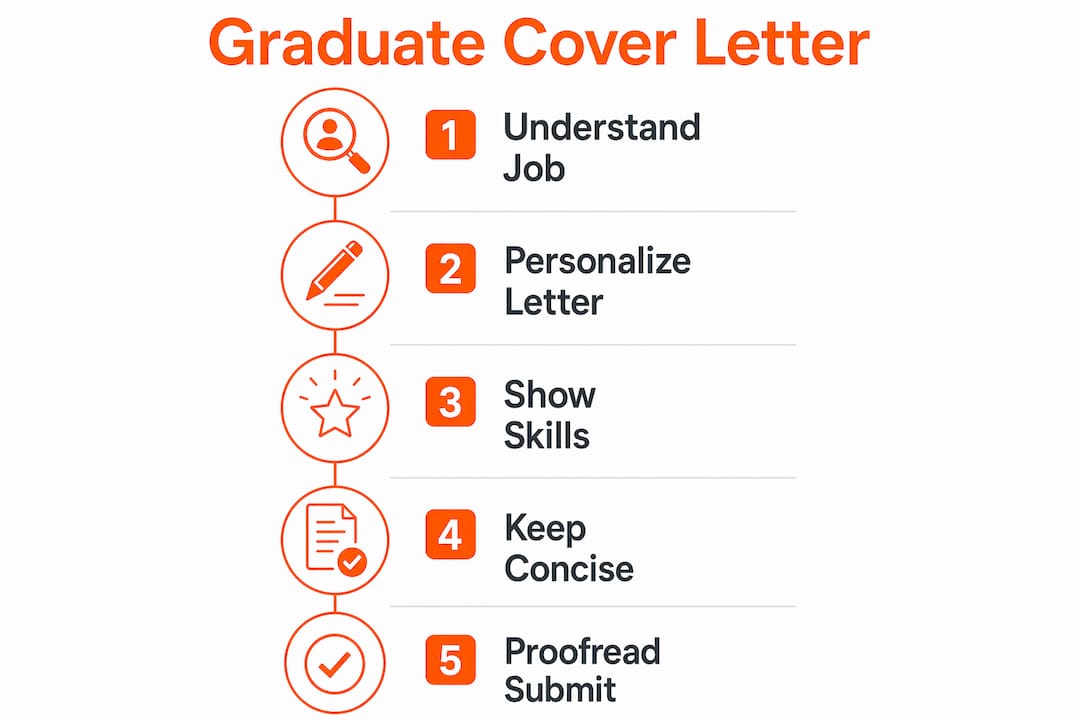
Tailoring is the single most important thing you can do to improve a graduate job application letter. A letter written for one employer and sent to twenty others will not perform. Here is how to personalise yours effectively.
-
Research the employer before you write a single word. Visit their website, read recent news, and understand their stated values. Knowing the employer and articulating why you want to work for that specific organisation strengthens your letter considerably.
-
Map the job description to your experience. Read the person specification carefully and identify two or three criteria you can address with real examples. A data analysis module, a student society leadership role, or a part-time customer service job can all provide relevant evidence.
-
Use the employer’s language. If the job advert uses the phrase “stakeholder communication,” use that phrase when describing your relevant experience. This supports keyword matching and improves your chances with ATS screening tools.
-
Select your strongest examples, not your longest list. Translating experiences into terms the employer recognises means focusing on a few powerful examples tied to the job criteria, not cataloguing everything you have ever done.
-
Write the cover letter after completing your CV. This approach maintains consistency between documents, avoids redundant content, and helps you tailor more precisely.
-
Follow any formatting instructions in the job advert. If the employer specifies a word limit or a particular subject line for the email, follow it exactly. Ignoring stated instructions signals poor attention to detail before you have even been interviewed.
For additional guidance on aligning your documents to current hiring expectations, the 2026 CV tailoring checklist from SparkCV covers ATS requirements and keyword matching in detail.
What mistakes do graduates commonly make in cover letters?
Most cover letter errors come from rushing or copying. Knowing what to avoid is as useful as knowing what to include.
- Repeating the CV word for word. Your cover letter should complement your CV, not duplicate it. Common mistakes include repeating CV content verbatim, which wastes the recruiter’s time and adds no new information.
- Using vague, unsubstantiated claims. Phrases like “I am a passionate team player” mean nothing without an example. Replace every claim with a brief, specific illustration.
- Writing too long. A letter that runs to two pages signals poor editing skills. Recruiters want enough information to want to meet you, not a full autobiography.
- Ignoring the employer entirely. Failing to demonstrate why the company interests you is one of the most common weaknesses in graduate applications. It suggests you have not done your research.
- Missing contact details or a closing statement. Always include your email address and phone number, and close with a clear, polite request for an interview.
- Ignoring formatting or length instructions. If the job advert specifies a one-page limit or a particular file format, treat that as a test of your ability to follow instructions.
Pro Tip: Before submitting, read your letter aloud. If a sentence sounds awkward or overly formal when spoken, rewrite it. Natural, confident language reads better than stiff corporate phrasing.
A poorly formatted or unfocused letter can also cause your application to be rejected before it is read. Formatting and clarity matter from the very first line.
Practical tips for writing a compelling cover letter
Writing a strong cover letter for fresh graduates does not require years of work experience. It requires clarity, evidence, and a genuine connection to the role.
-
Keep it under one page. A concise, tailored letter that is clear and well-structured will always outperform a longer, unfocused one.
-
Lead with your strongest point. Do not bury your most relevant qualification in the third paragraph. Put your best evidence early, where it will be read.
-
Draw on academic and extracurricular evidence. As a recent graduate with limited work experience, focus on how your coursework, dissertations, society roles, or volunteering provide skills relevant to the employer’s needs.
-
Quantify where you can. “Managed a team of six volunteers” is stronger than “worked in a team.” Numbers give recruiters a concrete sense of scale and impact.
-
Use an ATS-friendly format. Stick to standard fonts such as Arial or Calibri, avoid tables or graphics in the letter body, and save the file as a PDF unless instructed otherwise.
-
Proofread twice and ask someone else to review it. Spelling errors and grammatical mistakes in a cover letter signal carelessness. Tools such as Grammarly or Hemingway Editor can catch surface errors, but a second pair of human eyes catches tone and logic issues.
Key takeaways
A graduate cover letter works when it is concise, specific, and directly connected to the employer’s stated needs and values.
| Point | Details |
|---|---|
| Clear definition | A graduate cover letter is a personalised one-page document that accompanies your CV and explains your motivation and fit. |
| Four-paragraph structure | Cover the reason for writing, interest in the organisation, your qualifications, and a polite closing with contact details. |
| Tailor every letter | Research the employer, match your examples to the job criteria, and use the language of the job advert. |
| Avoid common errors | Do not repeat your CV, use vague claims, ignore the employer, or exceed one page. |
| Evidence over assertion | Replace every claim with a concrete example from your degree, placements, or extracurricular activities. |
Write your cover letter faster with SparkCV
Tailoring a cover letter for every application takes time, and getting the phrasing right is harder than it looks. SparkCV uses AI to analyse your existing CV and the job description, then generates a tailored cover letter in minutes. The platform matches your skills to the role’s requirements, suggests precise phrasing, and produces ATS-friendly output that gives your application the best possible chance of reaching a recruiter.
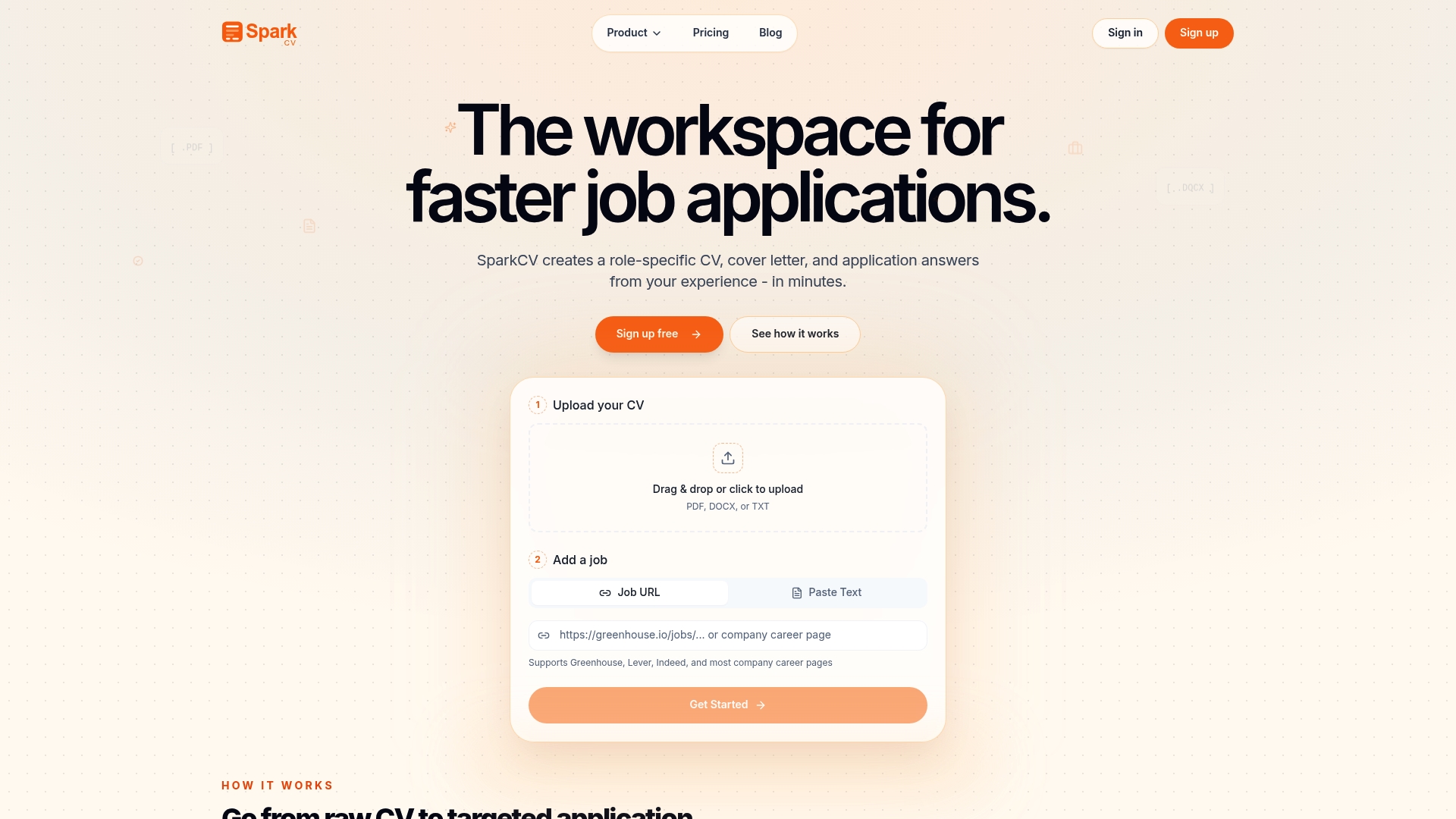
Whether you are applying for your first graduate role or refining your approach after a few rejections, SparkCV’s AI tools remove the guesswork from cover letter writing. You can also use SparkCV to generate tailored answers to application questions, keeping every part of your submission consistent and targeted. Sign up free and produce your first tailored cover letter today.
FAQ
What is the purpose of a graduate cover letter?
A graduate cover letter introduces your application by explaining your motivation for the role and demonstrating how your skills and experience match the employer’s needs. It complements your CV rather than repeating it.
How long should a cover letter for a fresh graduate be?
A graduate cover letter should be no longer than one page, typically structured as three to four short paragraphs. Recruiters want enough information to decide whether to invite you for an interview, not a full career history.
What should I include in a graduate cover letter?
Include the job title and source of the vacancy, your reason for wanting to work for that specific organisation, two or three examples that demonstrate your fit with the role criteria, and a polite closing with your contact details.
Should a graduate cover letter be different from a standard cover letter?
Yes. A cover letter for fresh graduates relies more heavily on academic projects, coursework, and extracurricular activities as evidence of skills, since direct work experience is limited. The focus should be on fit rather than experience volume.
How do I avoid my cover letter sounding generic?
Research the employer specifically, name the organisation and reference their values or recent work, and select examples that directly address the job description criteria. Tailored, specific letters consistently outperform mass-produced ones with recruiters.
Recommended reads
Keep exploring





Hear more from SparkCV
Leave your email for new articles, onboarding invites, and launch news.
We’ll only use this for SparkCV emails, and you can unsubscribe any time.