
Sample cover letters for students: 2026 UK guide

A cover letter is the document that turns your CV from a list of facts into a case for hiring you. For students and recent graduates, it carries even more weight: when your work history is thin, a well-written letter is often the only place you can show motivation, personality, and genuine fit for the role.
A student cover letter is a personalised, one-page document that introduces you to a potential employer, explains why you want the role, and makes the case that your skills and background match what they need. It sits alongside your CV but does a different job. Where a CV lists, a cover letter argues. Where a CV shows what you have done, a cover letter explains why it matters for this specific position.
Here is what a strong student cover letter does for you:
- Adds context to your CV by explaining gaps, career pivots, or why a module you studied is directly relevant
- Demonstrates transferable skills such as communication, teamwork, and problem-solving, drawn from university projects, volunteering, or part-time work
- Shows enthusiasm for the company and role in a way that a CV simply cannot
- Signals professionalism to UK recruiters who expect a cover letter as standard for graduate schemes, internships, and many part-time positions
- Gives you a voice so hiring managers can assess cultural fit before an interview
UK employers, particularly those running structured graduate schemes, use cover letters to filter applicants early. A generic letter, or no letter at all, is often enough to move your application to the rejection pile.
Table of Contents
- How to write a student cover letter step by step
- Student cover letter examples for common UK job roles
- Common mistakes that cost students the interview
- Why proofreading your cover letter is non-negotiable
- SparkCV makes writing a tailored cover letter faster
- Key takeaways
How to write a student cover letter step by step
Writing a cover letter feels daunting until you break it into clear stages. Follow this process and you will produce a letter that is focused, professional, and genuinely tailored to the role.
-
Research the company and role thoroughly. Read the job description carefully and note the key skills and qualities the employer is asking for. Visit the company website, check recent news, and understand their values. You cannot tailor your letter without this groundwork.
-
Set up your header correctly. Include your full name, email address, phone number, and the date at the top. Below that, add the hiring manager’s name (if known), their job title, the company name, and the company address. Clear, professional formatting with well-organised contact information is standard practice and makes a strong first impression.
-
Choose the right salutation. If you know the hiring manager’s name, use “Dear [Name]”. When the name is unavailable, professional standards recommend using “Dear Hiring Manager” rather than the outdated “To Whom It May Concern”.
-
Write an engaging opening paragraph. State the role you are applying for, where you found it, and one compelling reason why you are a strong candidate. Avoid opening with “I am writing to apply for…” — it is the most overused line in graduate applications. Try leading with your most relevant qualification or a specific reason you are drawn to the company.
-
Develop your body paragraphs. This is where you make your case. Use two or three focused paragraphs to highlight your transferable skills, academic achievements, and relevant experience. Draw on university projects, society roles, part-time jobs, and volunteering. Using the STAR method (Situation, Task, Action, Result) helps you illustrate skills with concrete examples rather than vague claims.
-
Reference the company specifically. Mention something particular about the organisation — a recent project, their stated values, or a product you genuinely admire. Letters that express specific enthusiasm for the company’s mission resonate more with recruiters and show you have done your homework.
-
Close professionally. Thank the employer for their time, express your interest in discussing the role further, and state that you look forward to hearing from them. Sign off with “Yours sincerely” if you used a named salutation, or “Yours faithfully” if you used “Dear Hiring Manager”.
-
Personalise every application. A letter written for one role will not work for another. Tailoring each cover letter to the specific role and company is critical for standing out. Even small adjustments — swapping in the company name, referencing a different skill — make a measurable difference.
-
Proofread rigorously before submitting. Read the letter aloud, use a spell-checker, and ask a friend or careers adviser to review it. One typo can undo an otherwise strong application.
Pro Tip: Save and submit your cover letter as a PDF unless the job advert specifically asks for a Word document. PDF format preserves your formatting across all devices and ATS software, so your letter looks exactly as intended when it lands in a recruiter’s inbox.
Student cover letter examples for common UK job roles
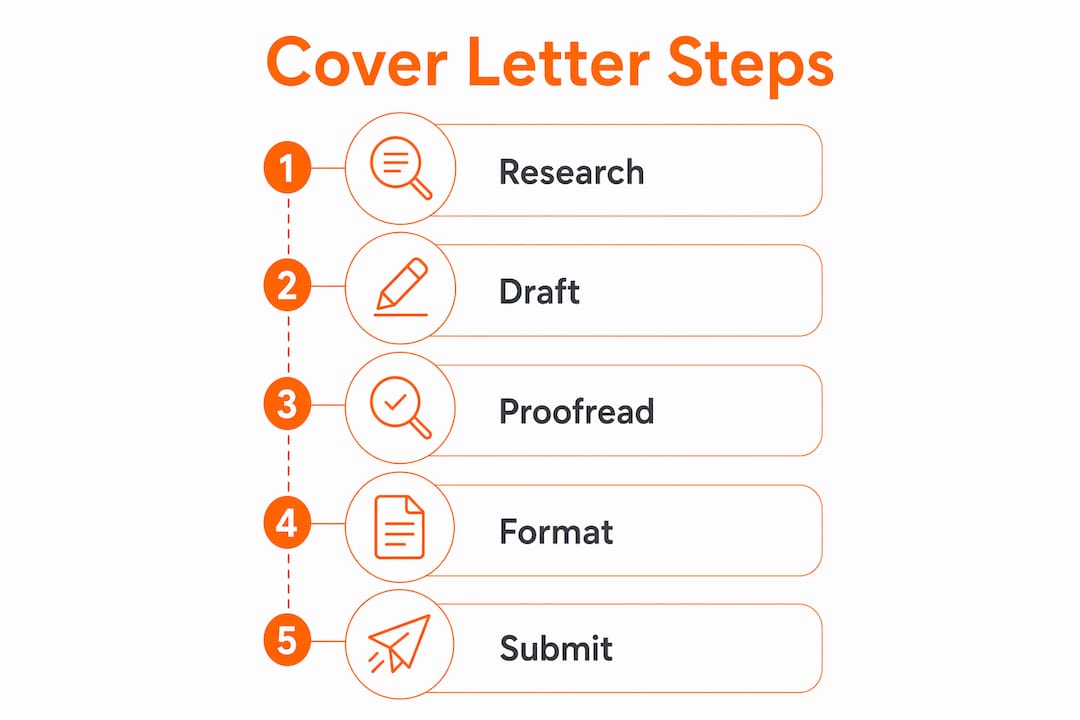
The structure of a cover letter stays consistent, but the content shifts depending on the role. Below are three realistic examples adapted to typical UK student positions, followed by a table summarising what to emphasise by job type.

Example 1: Part-time retail role
Dear Hiring Manager,
I am a second-year Business Management student at the University of Leeds, applying for the Part-Time Sales Assistant position advertised on your website. Having worked on a university fundraising committee where I managed customer-facing communications for over 200 donors, I am confident in my ability to deliver excellent service in a fast-paced retail environment.
During my time on the committee, I developed strong communication and problem-solving skills by handling donor queries and resolving complaints promptly. I am comfortable working in a team and adapting quickly to new systems, which I understand is central to the role at your store.
I am genuinely enthusiastic about your commitment to sustainable retail and would welcome the opportunity to contribute to your team. I am available for an interview at your convenience and look forward to hearing from you.
Yours faithfully, [Your Name]
Example 2: Summer internship (marketing)
Dear Ms Johnson,
I am a final-year Marketing student at the University of Edinburgh, and I am applying for the Summer Marketing Intern role listed on Prospects. Your agency’s recent campaign for [Client Name] caught my attention for its creative use of social media analytics, an area I have studied extensively and applied in my dissertation research.
For my third-year project, I led a team of four to develop a digital marketing strategy for a local charity, increasing their social media engagement by a measurable margin over eight weeks. This experience sharpened my skills in content planning, data analysis, and cross-team collaboration — all of which align directly with the responsibilities outlined in your job description.
I am excited by the opportunity to contribute to a forward-thinking agency and to develop my skills in a professional setting. Please find my CV attached. I would be delighted to discuss my application further at a time that suits you.
Yours sincerely, Sarah Mitchell
Example 3: Graduate scheme (finance)
Dear Mr Patel,
I am applying for the Finance Graduate Scheme at Barclays, having recently completed a BSc in Economics at the University of Bristol with a 2:1 classification. My academic grounding in financial modelling, combined with a summer placement at a regional accountancy firm, has prepared me well for the analytical demands of this programme.
During my placement, I assisted with month-end reporting and identified a process inefficiency that reduced reconciliation time by approximately 15%. Working under pressure to real deadlines gave me a clear picture of the skills your scheme will develop further, and I am eager to build on that foundation within a global institution.
Barclays’ commitment to sustainable finance aligns with my own values, and I am particularly drawn to the scheme’s rotation structure, which offers exposure across multiple business areas. I look forward to the opportunity to discuss how I can contribute.
Yours sincerely, James Okafor
| Job type | Key skills to highlight | Tone | What to reference |
|---|---|---|---|
| Part-time / retail | Customer service, teamwork, reliability | Warm, professional | Store values, specific products |
| Internship | Academic projects, initiative, relevant modules | Enthusiastic, specific | Company campaigns, recent news |
| Graduate scheme | Analytical skills, placements, academic results | Formal, evidence-led | Programme structure, company mission |
| Scholarship application | Academic excellence, leadership, community impact | Measured, purposeful | Scholarship criteria, long-term goals |
For scholarship applications, the approach shifts slightly. Lead with your academic record and long-term ambitions rather than employability skills, and connect your goals explicitly to the scholarship’s stated purpose.
Common mistakes that cost students the interview
Most rejected student cover letters fail for the same handful of reasons. Knowing them in advance puts you well ahead of the competition.
Mistakes to avoid:
- Sending a generic letter. Copying and pasting the same letter for every application is one of the most common cover letter errors and one of the easiest for recruiters to spot. If your letter could have been written by anyone, for any company, it will not get you far.
- Repeating your CV word for word. Your cover letter should add to your CV, not duplicate it. Use the letter to explain and contextualise, not to list the same bullet points again.
- Poor structure. A letter without clear paragraphs, a logical flow, or a proper opening and close reads as unpolished. UK employers expect a professional format.
- Oversharing irrelevant details. Mentioning hobbies, personal circumstances, or experiences that have no bearing on the role wastes valuable space and can distract from your strengths.
- Clichés and hollow phrases. “I am a hard-working team player with excellent communication skills” tells a recruiter nothing. Replace every cliché with a specific example.
- Exceeding one page. Keep your letter to a single page, roughly three to four short paragraphs. Brevity signals that you can communicate clearly and respect the reader’s time.
- Failing to proofread. Typos and grammatical errors are the most common failure points in student applications, and they signal a lack of care.
Golden rules to follow:
- Address the letter to a named person wherever possible
- Mirror the language of the job description to pass ATS keyword checks
- Keep sentences short and paragraphs focused
- Use active verbs: “led”, “built”, “analysed”, “delivered”
- Ask someone else to read it before you submit
Highlighting your transferable soft skills effectively is one of the most reliable ways to compensate for limited formal work experience. The key is specificity: name the skill, give an example, and state the result.
Why proofreading your cover letter is non-negotiable

A single typo in a cover letter can end an application before it begins. For students with limited work history, an error-free document is one of the few concrete signals of professionalism you can offer a recruiter at this stage.
Typos and grammatical errors are the most common failure points in student cover letters. Employers, particularly those hiring for detail-oriented roles in finance, law, or communications, treat a careless letter as evidence of how you will perform on the job. That is a harsh standard, but it is the reality of competitive UK graduate recruitment.
Statistic callout: Attention to detail is cited by employers as a key reason for rejecting applications with even minor errors, particularly when candidates have limited professional experience to demonstrate their capabilities.
Proofreading is not just about catching spelling mistakes. Read for tone, clarity, and consistency. Check that you have used the correct company name throughout (a surprisingly common error when applying to multiple employers), that your dates are accurate, and that every claim you make is supported by a specific example.
Pro Tip: After writing your letter, leave it for at least an hour before proofreading. Fresh eyes catch errors that a tired mind misses. Then read it aloud — your ear will catch awkward phrasing that your eye skips over. Tools such as Grammarly can help with grammar and spelling, but they will not catch every contextual error, so a human review remains the gold standard.
Converting your finished letter to PDF before submitting is the final step most students overlook. PDF format ensures your formatting stays intact across different operating systems and ATS platforms, so the recruiter sees exactly what you intended. Submit as a Word document only when the job advert explicitly requests it.
SparkCV makes writing a tailored cover letter faster
Writing a strong, tailored cover letter for every application takes time, and that time adds up quickly when you are applying to multiple roles alongside your studies. SparkCV gives you a faster route to a polished, ATS-friendly cover letter without starting from scratch each time.
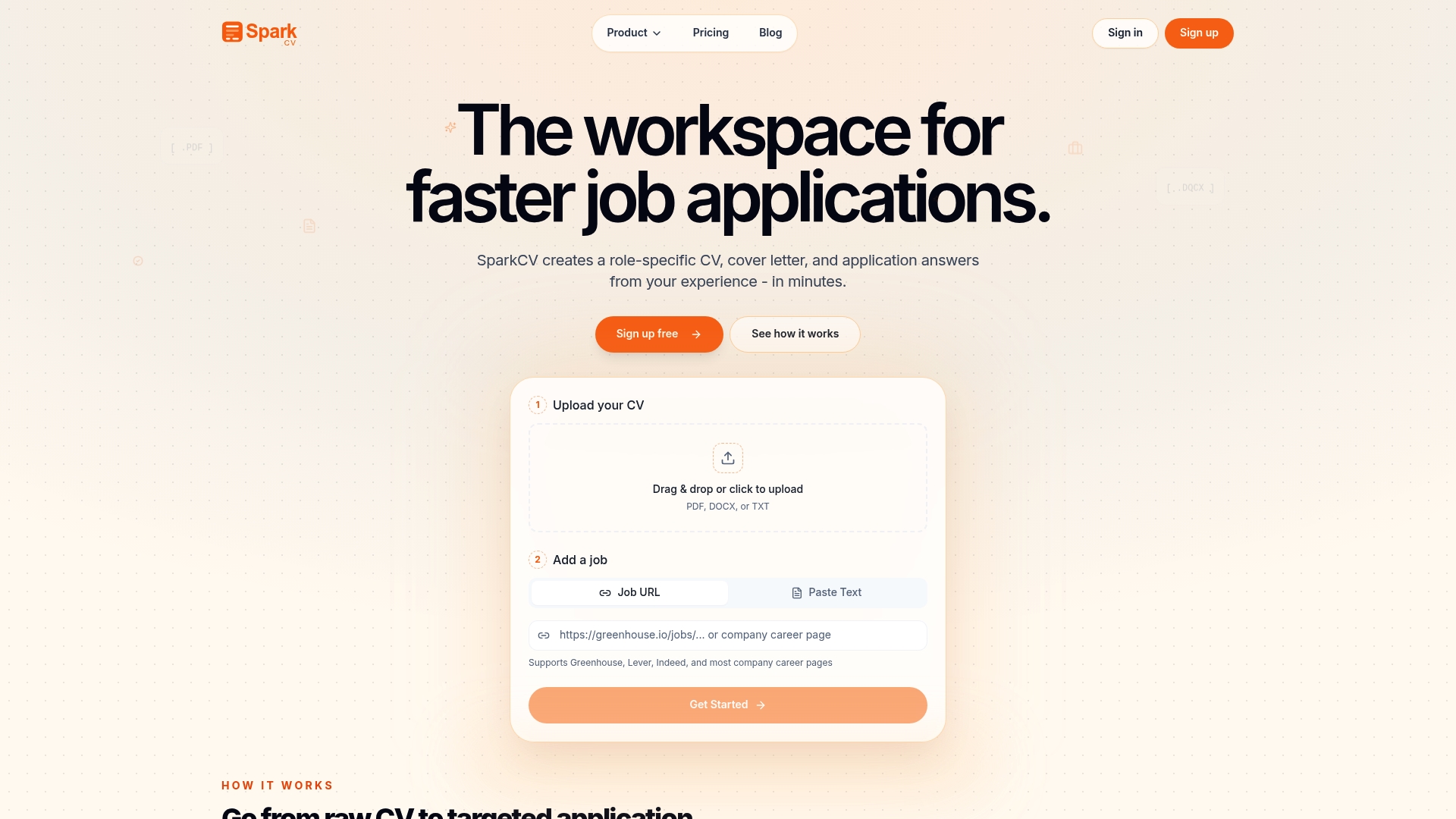
SparkCV analyses your existing CV and the job description, then generates a cover letter that is already aligned with the role’s keywords and requirements. You get a draft that reflects your actual experience, not a generic template you have to rewrite from the ground up. The platform also handles tailored application questions, so you can cover every part of a graduate scheme or internship application in one place. For students juggling deadlines, that is a genuine time saving on every single application. Get started with SparkCV and submit your next cover letter with confidence.
Key takeaways
A well-tailored, error-free cover letter is the single most effective tool a student has for standing out in competitive UK job applications.
| Point | Details |
|---|---|
| Cover letters complement your CV | Use the letter to show motivation and transferable skills that a CV cannot convey. |
| Tailor every application | Personalising each letter to the specific role and company is critical for standing out. |
| Use the STAR method | Structure skill examples with Situation, Task, Action, Result to give concrete evidence. |
| Proofread without exception | Typos and errors are the most common rejection trigger for student applications. |
| SparkCV speeds up the process | SparkCV generates ATS-aligned cover letters from your CV and the job description in minutes. |
Recommended reads
Keep exploring






Hear more from SparkCV
Leave your email for new articles, onboarding invites, and launch news.
We’ll only use this for SparkCV emails, and you can unsubscribe any time.