
Types of CV customisation strategies for job seekers

CV customisation is defined as the process of tailoring your curriculum vitae to match the specific requirements of each job you apply for. The types of CV customisation strategies you use directly affect whether your application passes automated screening systems and reaches a recruiter’s desk. Direct keyword matching is one of the strongest drivers of positive ATS results, making it a non-negotiable part of any modern application. Techniques such as the Priority Shuffle method, summary personalisation, and section reordering each target different parts of your CV to maximise relevance and impact.
1. Types of CV customisation strategies: the Priority Shuffle method
The Priority Shuffle is currently the most effective method for customising your experience section. It works by reordering your bullet points so that the ones most relevant to the employer’s priorities appear first.
Most job seekers list their responsibilities in chronological order or by personal preference. Recruiters and ATS systems, however, weight the first three to four bullet points most heavily. Placing your most relevant achievements at the top signals immediately that you are a strong match.
Using exact job description keywords in your experience section can improve ATS scores by 30–40 points compared to generic phrasing. That gap is the difference between being shortlisted and being filtered out before a human ever reads your CV.
- Read the job description and highlight the top three to five required skills or responsibilities.
- Identify which of your existing bullet points address those skills directly.
- Move those bullet points to the top of each relevant role.
- Rewrite them using the exact phrasing from the job posting where possible.
Pro Tip: Copy the job description into a plain text document and count which words appear most frequently. Those are the terms your top bullet points must contain.
2. Customising your personal summary
Your personal summary is the first section a recruiter reads. A generic summary wastes that opportunity. A targeted one signals immediately that you understand the role.

Summaries with targeted keywords yield higher recruiter engagement and pass rates through automated screening. The summary should reflect the language of the job posting, not a broad description of your career to date.
Effective summary customisation follows three clear steps:
- Mirror the job title. If the posting says “Senior Data Analyst,” use that exact phrase in your summary rather than “experienced analyst.”
- Highlight two or three specific skills. Choose only the skills the employer listed as essential, not every skill you possess.
- State a measurable result. One concrete achievement makes your summary memorable and credible.
- Keep it to three or four sentences. Brevity signals confidence. Lengthy summaries suggest you cannot prioritise.
Avoid summaries that begin with “I am a highly motivated professional.” That phrase appears on thousands of CVs and adds no information. Replace it with a direct claim about what you do and for whom.
Pro Tip: Paste your current summary and the job description into SparkCV’s CV tool. It identifies the keyword gaps between the two and suggests targeted replacements in minutes.
3. Adapting formatting and section order
Reordering CV sections and adjusting formatting to match industry norms makes your CV more appealing to both recruiters and ATS systems. The section order that works for a creative role will not serve a finance application.
Different sectors have clear expectations about what they want to see first. The table below outlines the most common variations.
| Sector | Recommended section order | Key formatting note |
|---|---|---|
| Technology | Skills, Experience, Education | Use clean sans-serif fonts; list technical skills prominently |
| Finance | Experience, Education, Certifications | Formal layout; avoid colour beyond black and grey |
| Creative industries | Portfolio or Projects, Experience, Skills | Visual layout acceptable; include links to work samples |
| Healthcare | Qualifications, Registrations, Experience | List regulatory body memberships near the top |
| Academia | Publications, Research, Education, Experience | Longer CVs are standard; detail is expected |
Customised formatting also extends to headings. “Work History” suits informal sectors. “Professional Experience” suits corporate environments. Matching your language to the sector’s norms shows cultural awareness before the interview begins.
For senior professionals in client-facing roles, a polished LinkedIn profile that mirrors your CV’s formatting and language reinforces your personal brand consistently across platforms.
4. Leveraging keywords and phrasing to pass ATS screening
Role-specific keywords and phrases matching the job advertisement improve your CV’s compatibility with automated screening systems and increase recruiter interest. ATS software scans for exact or near-exact matches to the terms listed in the job posting.
The most effective approach to keyword integration covers three areas:
- Technical skills keywords. Include the specific tools, platforms, and methodologies named in the job description. “Python” and “data visualisation” perform better than “programming” and “reporting.”
- Soft skills phrasing. Industry-specific language matters for recruiter responsiveness. “Cross-functional collaboration” reads differently from “teamwork” in a corporate context.
- Action verbs from the job ad. If the posting uses “led,” “delivered,” and “managed,” mirror those verbs in your bullet points. ATS systems recognise verb patterns as well as nouns.
- Avoid keyword stuffing. Repeating a keyword more than two or three times in a section triggers spam filters in some ATS platforms and reads as unnatural to human reviewers.
Balance is the goal. Your CV must read fluently to a person while containing enough exact matches to satisfy automated screening. Read your CV aloud after editing. If a sentence sounds forced, rewrite it.
5. Customising for different job levels and sectors
CV personalisation methods differ significantly depending on whether you are applying for an entry-level, mid-level, or senior role. The depth of detail, the type of examples you include, and the language you use all need to shift accordingly.
- Entry-level roles. Focus on transferable skills, academic projects, and any relevant work experience, including internships and voluntary work. Keep descriptions concise. Recruiters at this level expect potential, not a long track record.
- Mid-level roles. Lead with measurable achievements rather than responsibilities. Quantify results wherever possible. Recruiters want evidence that you have delivered outcomes, not just performed tasks.
- Senior roles. Emphasise leadership, commercial impact, and strategic decisions. Reduce detail on day-to-day tasks. A senior executive’s CV should focus on what changed because of their involvement, not what their job description said.
- Sector-specific language. Customising CV content depth and examples by seniority and sector signals genuine understanding of the role. A CV written for a public sector role should use different terminology than one written for a start-up.
- Adjust your tone. Public sector and regulated industries expect formal, precise language. Technology and creative sectors respond better to direct, plain English. Read three or four job postings in your target sector and note the vocabulary patterns before you write a single word.
The core principle across all levels is the same: every sentence on your CV should answer the question “why does this matter to this employer?”
Key takeaways
The most effective CV customisation combines the Priority Shuffle method, targeted keyword integration, and section reordering tailored to your sector and seniority level.
| Point | Details |
|---|---|
| Priority Shuffle method | Reorder bullet points so your most relevant achievements appear first in each role. |
| Summary personalisation | Use exact keywords from the job posting and state one measurable result. |
| Section order by sector | Match your CV’s layout and headings to the norms of your target industry. |
| Keyword and phrasing balance | Include role-specific terms without repeating them so often that the text reads as unnatural. |
| Seniority-level tailoring | Adjust detail, language, and examples to match the expectations of entry, mid, or senior roles. |
SparkCV makes CV tailoring faster and more accurate
Applying these resume tailoring strategies manually across multiple applications takes significant time. SparkCV’s AI-powered CV platform analyses your existing CV alongside each job description and generates a tailored version in minutes, applying keyword matching and bullet reordering automatically.
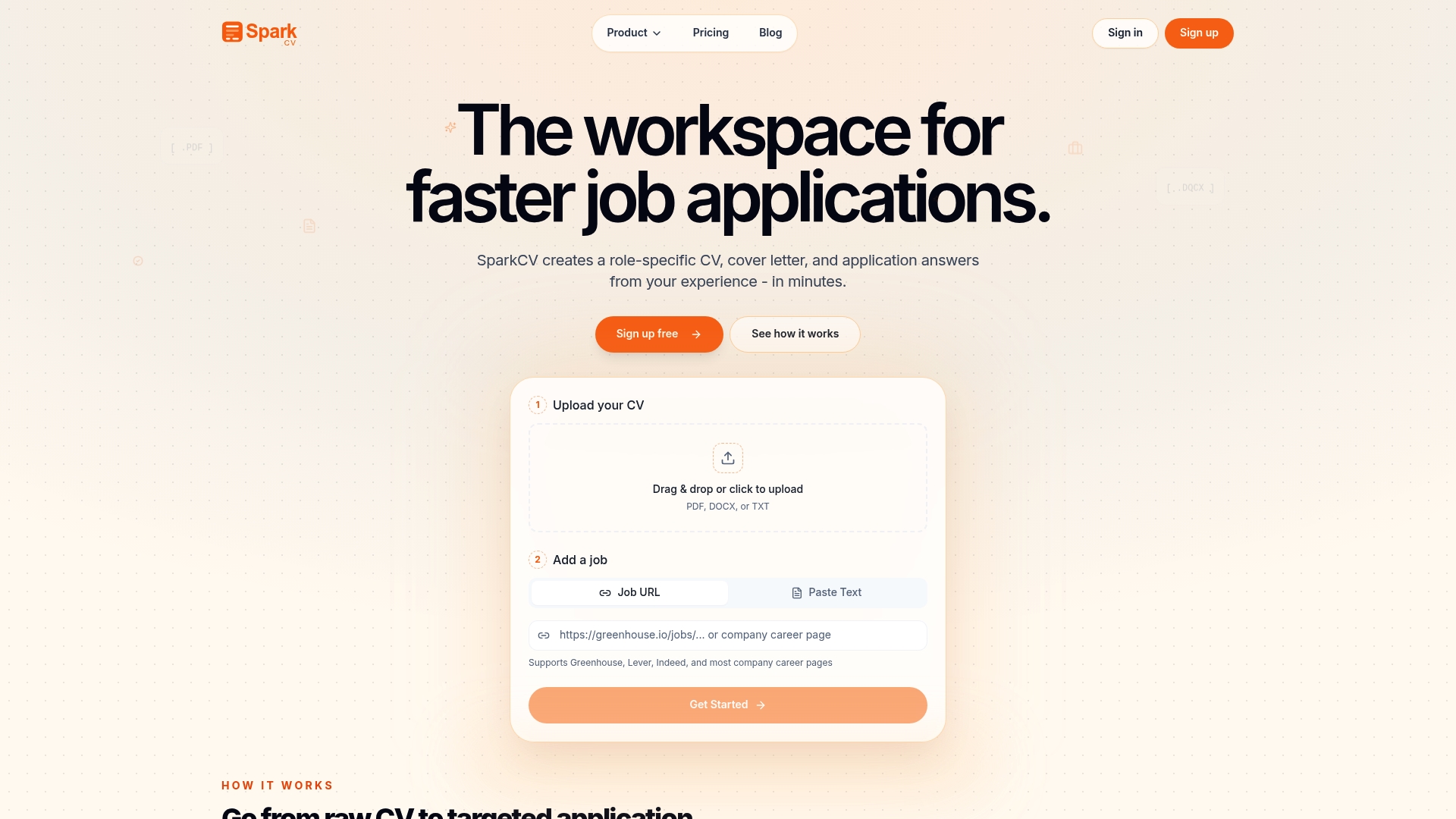
SparkCV handles the Priority Shuffle, summary rewriting, and ATS keyword integration so you can focus on preparing for interviews rather than reformatting documents. The platform also generates tailored cover letters and answers to application questions, giving you a complete, polished submission for every role. Sign up free at SparkCV and put these CV customisation techniques to work on your next application.
FAQ
What is CV customisation?
CV customisation is the process of adjusting your CV’s content, keywords, and structure to match the specific requirements of each job posting. The goal is to increase relevance for both ATS systems and human recruiters.
What is the Priority Shuffle method?
The Priority Shuffle reorders your experience bullet points so that the achievements most relevant to the employer’s priorities appear first. Exact keyword matching combined with this reordering can improve ATS scores by 30–40 points.
How often should I customise my CV?
You should customise your CV for every application. A single generic CV rarely passes ATS screening across different roles, even within the same sector.
Does formatting affect ATS results?
Yes. Customised formatting that matches industry norms improves both ATS compatibility and recruiter perception. Sector-appropriate section order and clean layouts reduce the risk of parsing errors.
How do I avoid keyword stuffing on my CV?
Use each key term two to three times at most and read your CV aloud after editing. If a phrase sounds forced or repetitive, rewrite the sentence using a natural synonym or restructure the bullet point entirely.
Recommended reads
Keep exploring






Hear more from SparkCV
Leave your email for new articles, onboarding invites, and launch news.
We’ll only use this for SparkCV emails, and you can unsubscribe any time.