
Mid-career CV update checklist: 9 steps to stand out

A mid-career CV update checklist is a structured guide for refreshing your CV to reflect recent achievements, leadership impact, and current market expectations. At this stage, your CV needs to do more than list what you have done. It must signal where you are headed and why you are ready for the next level. Tools like Grammarly for language polish and AI-driven platforms like SparkCV for keyword alignment make the process faster and more precise. This checklist covers every critical step, from rewriting your professional summary to formatting for ATS compatibility.
1. What should a mid-career CV update checklist cover?
A professional CV improvement checklist for mid-career professionals addresses six core areas: your summary, achievements, skills, experience depth, education, and formatting. Each area needs a specific audit, not a general refresh. Skipping any one of them leaves gaps that recruiters notice immediately.
The most common error is treating the checklist as a cosmetic exercise. Updating fonts and dates without restructuring content produces a polished document that still fails to communicate your value. Work through each area in order.

2. Rewrite your professional summary for future direction
Your professional summary is the first thing a recruiter reads, so it must lead with where you are going, not where you have been. Professional summaries should highlight future career direction and transferable leadership qualities rather than vague objectives. A summary that reads “experienced project manager with ten years in financial services” tells a recruiter nothing about your ambition or your value at the next level.
Rewrite your summary to name your target role, your strongest transferable skill, and one quantified result. Three sentences is enough. Anything longer dilutes the impact.
Pro Tip: Draft your summary last. Once you have updated every other section, you will have a clearer picture of the narrative your CV is telling.
3. Shift from duties to achievements
Career experts advise emphasising leadership and value, not just execution, even without formal management roles. Recruiters favour results-driven statements with metrics over generic task lists. A bullet point that reads “managed supplier relationships” is far weaker than “reduced supplier costs by 18% over two years by renegotiating three key contracts.”
For every role in the last ten years, review each bullet point and ask: does this show impact or just activity? If it only describes a task, rewrite it with a result. Use numbers wherever possible: percentages, revenue figures, team sizes, or time saved.
4. Prioritise your first bullet point under each role
The first bullet point under each role is the most likely to be read, making prioritisation critical. This is one of the most overlooked tactics in updating a CV for mid-career applications. You do not always need to rewrite your bullets. You need to reorder them so the most relevant accomplishment appears first for each role you apply to.
This approach works particularly well when you are applying across different functions or sectors. Swap the order of your bullets to match the priorities of each job description. The content stays the same. The emphasis shifts.
5. Remove early-career clutter
Mid-career CVs should focus on the last 10–15 years of experience, cutting irrelevant or outdated roles to allow clarity and strategic positioning. A role you held in 2005 as a junior analyst adds no value when you are applying for a senior leadership position in 2026. It dilutes your narrative and wastes the recruiter’s time.
Remove roles older than 15 years entirely, or condense them into a single line: “Earlier career: roles in X and Y sectors, 2003–2010.” This preserves the timeline without cluttering the page.
6. Align your skills section with target role keywords
Tailored CVs using job-specific keywords and mirrored job titles improve ATS compatibility and recruiter relevance. Your skills section is the fastest part of your CV to update and the most directly tied to passing automated screening. Read the job description carefully and mirror the exact language it uses.
If the posting says “stakeholder management,” use that phrase rather than “relationship building.” ATS systems match keywords literally. A synonym will not always register as a match. Check your CV tailoring approach against each new job description before you submit.
7. Tailor your CV for each application without a full rewrite
The 15-minute tailoring method is a practical approach for mid-level job applications: update your summary, reorder your first bullet points, and swap two or three skills keywords. That is all you need for most applications. A full rewrite for every role is neither realistic nor necessary.
Build your CV in modular sections so you can swap out the core skills block or summary paragraph quickly. Keep two or three versions of your summary saved for different role types, such as one for people management roles and one for technical specialist positions. This career change CV tip applies equally when you are moving sectors.
Pro Tip: Keep a master CV with every achievement and role detail included. Tailor down from this master version for each application rather than building from scratch each time.
8. Common mistakes that weaken a mid-career CV
The most damaging mistakes at this career stage are predictable and fixable:
- Generic objective statements. Replace any line that starts with “seeking a challenging role” with a targeted summary that names your specialism and value.
- Overloading early roles. Three bullet points per role from more than ten years ago is too many. Cut to one or remove the role entirely.
- No quantified results. Every role should contain at least one number. If you cannot find one, use a comparative: “reduced processing time significantly” is weaker than “cut processing time by a third.”
- Poor ATS formatting. Avoid tables, text boxes, headers and footers, and graphics. ATS-friendly layouts use clear headings, consistent fonts, and standard section titles.
- Passive language. Replace “was responsible for” with active verbs: led, built, delivered, reduced, grew.
A CV that lists what you were responsible for tells a recruiter what your job description said. A CV that shows what you achieved tells them what you are worth.
9. Use the right tools to speed up your update
Grammarly catches grammatical errors and improves sentence clarity, which matters when your CV is competing against polished submissions from other experienced professionals. Beyond grammar, AI CV optimisation platforms like SparkCV analyse keyword matches between your CV and a job description, then recommend targeted edits. This removes the guesswork from tailoring and cuts the time spent on each application.
A career log tool tracks your achievements as they happen, so your next CV update takes minutes rather than hours. Log project outcomes, promotions, and skills gained on a rolling basis. When you need to update your CV, the raw material is already there.
Soft skills such as communication, stakeholder influence, and cross-functional leadership are increasingly valued at mid-career level. Include them in your skills section with brief evidence, not just as standalone labels.
Key takeaways
A strong mid-career CV update prioritises achievements over duties, removes outdated content, and aligns every section with the specific language of your target role.
| Point | Details |
|---|---|
| Lead with achievements | Replace duty-based bullets with quantified results for every role in the last ten years. |
| Reorder, do not always rewrite | Move your most relevant bullet point to the top of each role to match each application. |
| Cut early-career clutter | Focus on the last 10–15 years and condense or remove older roles entirely. |
| Tailor skills to each job | Mirror exact keywords from the job description to pass ATS screening. |
| Use tools to save time | Platforms like SparkCV and career log tools reduce the time spent on each update. |
How SparkCV supports your mid-career CV update
Updating a CV at mid-career level takes more than a quick edit. You need to frame your achievements clearly, match the right keywords, and tailor your application for each role without spending hours on every submission.
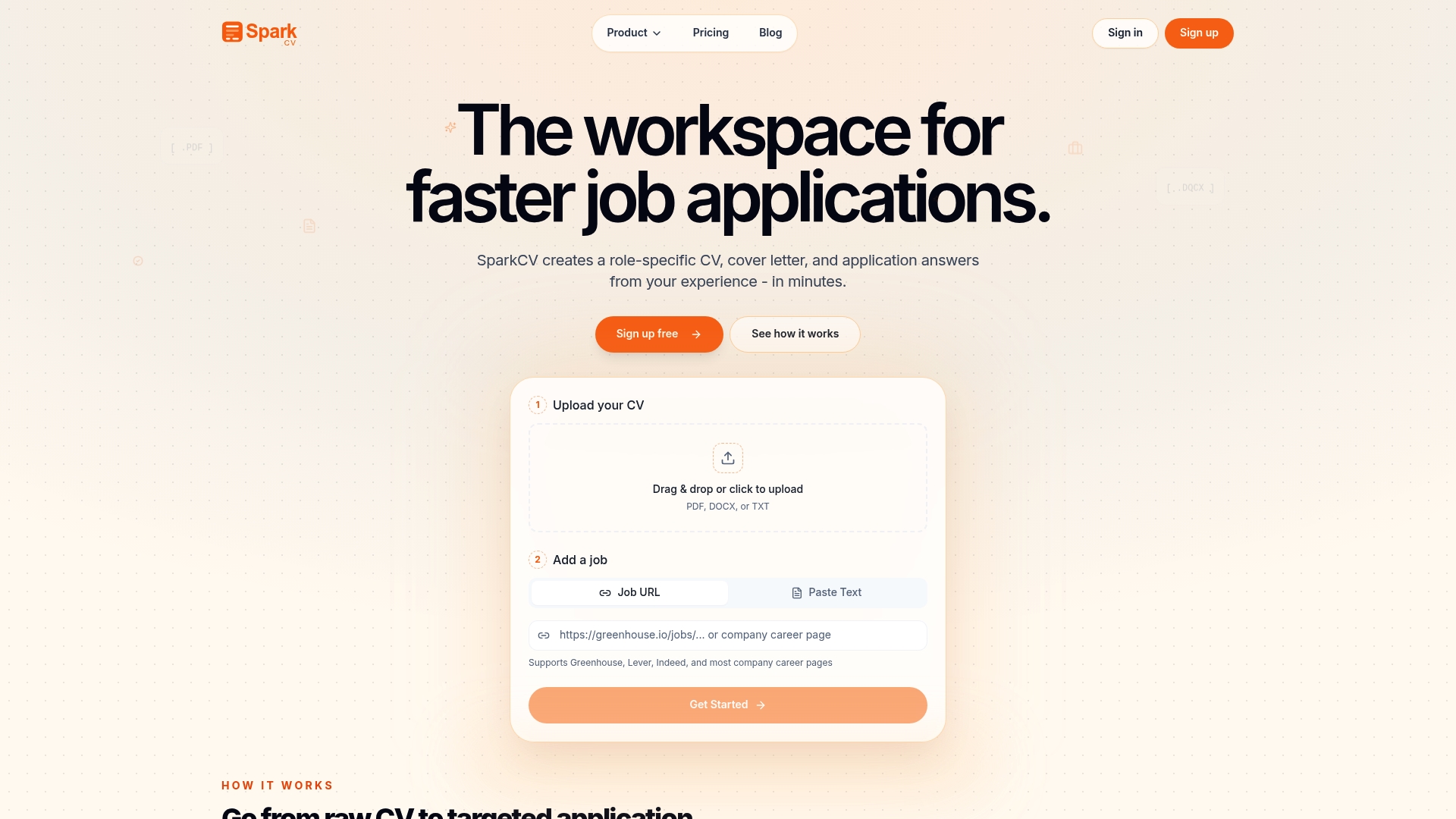
SparkCV analyses your existing CV alongside the job description and generates a tailored version in minutes. It flags keyword gaps, suggests stronger phrasing for your achievements, and produces application question answers alongside your CV. The result is a submission that is aligned with what the recruiter is actually looking for. Sign up free at SparkCV and see how much faster your next application can be.
FAQ
What is a mid-career CV update checklist?
A mid-career CV update checklist is a structured list of CV elements to audit and refresh, covering your summary, achievements, skills, experience depth, education, and formatting. It helps you present your current value clearly rather than simply recording your work history.
How long should a mid-career CV be?
Mid-career CVs typically run to two pages. A third page is only justified when the depth of experience genuinely requires it.
How often should I update my CV at mid-career level?
Update your CV after every significant achievement, promotion, or completed project. Waiting until you need it means spending hours reconstructing details you have forgotten.
What is the biggest mistake mid-career professionals make on their CV?
Overemphasising responsibilities and failing to quantify impact is the most common error. Recruiters want to see results, not a restatement of your job description.
How do I make my CV ATS-friendly?
Use standard section headings, a consistent font, and no tables or graphics. Mirror the exact keywords from the job description in your skills and summary sections.
Recommended reads
Keep exploring






Hear more from SparkCV
Leave your email for new articles, onboarding invites, and launch news.
We’ll only use this for SparkCV emails, and you can unsubscribe any time.