
How job boards index CV keywords: 2026 guide

Job boards index CV keywords by combining literal keyword matching with AI-powered semantic analysis, matching both exact terms and conceptually related skills simultaneously. This hybrid approach means your CV must satisfy two distinct systems at once. Applicant Tracking Systems (ATS) like those built on Elasticsearch extract structured data and build keyword indexes for candidate searches. Semantic engines then go further, interpreting meaning and context beyond the exact words you use. Understanding how job boards index CV keywords is the foundation of any effective CV keyword strategy in 2026.
How do job boards index and match CV keywords?
Job boards use two core methods to index your CV: exact keyword matching and semantic matching. Knowing the difference between them changes how you write every line of your CV.
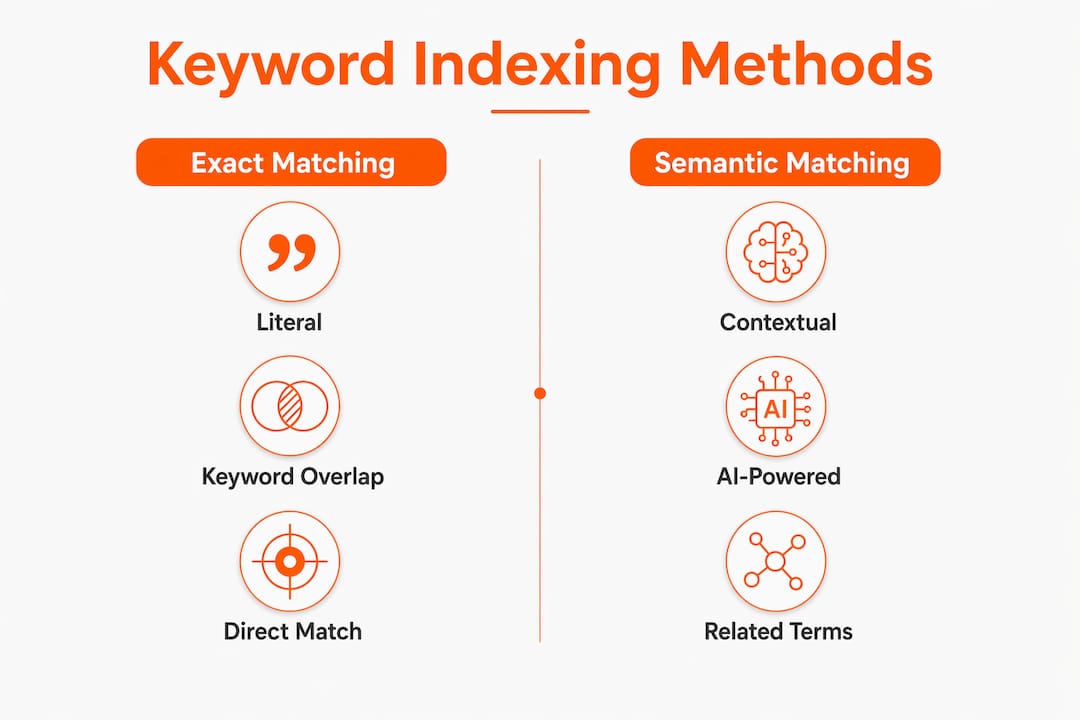
Exact keyword matching relies on literal overlap between the words in your CV and those in a job description. A keyword search for ‘Python’ might surface 200 roles, but miss others labelled ‘data engineer’ that require Python without naming it explicitly. This is the fundamental limitation of keyword-only indexing.

Semantic matching solves that problem. It works by embedding your CV and a job description into a vector space, where related concepts cluster close together. Terms like ‘Python’, ‘Pandas’, and ‘scikit-learn’ sit conceptually close in semantic space, so a CV strong in one signals competence in the others. This is why a ‘frontend engineer with React experience’ can match a search for ‘React developer’ even without an exact title match.
Most modern platforms use a hybrid model, combining classic keyword overlap metrics like BM25 with semantic embeddings to produce a composite relevance score. That score also factors in salary bands, location preferences, and seniority signals. The weights for each component can be adjusted by the platform, which means no two job boards rank candidates in exactly the same way.
- Exact matching is fast and transparent, but rigid. It rewards CVs that mirror job description language precisely.
- Semantic matching is flexible and context-aware, but it can be misled by poorly structured CVs.
- Hybrid scoring combines both, giving you the best chance of appearing in results when your CV is well written and well structured.
Pro Tip: When you apply to a role, paste the job description into a plain text editor and highlight every skill, tool, and job title mentioned. Those are your primary indexing targets.
How to identify and select the best CV keywords
Selecting the right keywords starts with the job description itself. Every role you apply for is a direct signal of what the indexing system is looking for. Read it carefully and extract three categories of terms: technical skills (e.g. ‘SQL’, ‘project management’), industry jargon (e.g. ‘agile methodology’, ‘P&L accountability’), and job titles that reflect your seniority level.
Follow these steps to build a targeted keyword list for each application:
- Copy the job description into a document and bold every skill, qualification, and tool mentioned more than once. Repeated terms carry more indexing weight.
- Check related job postings on platforms like LinkedIn and Indeed for the same role. Terms that appear across multiple listings are high-priority keywords for that field.
- Include long-tail phrases. 70% of web searches are long-tail, and the same principle applies to CV indexing. A phrase like ‘remote junior marketing analyst’ is more specific and more likely to match a targeted search than ‘marketing’ alone.
- Add semantically related terms. If the job description mentions ‘data visualisation’, also include ‘Tableau’, ‘Power BI’, or ‘dashboards’ where genuinely relevant to your experience. This broadens your semantic footprint without fabricating skills.
- Review your keyword density. Aim to use your primary skill terms two to three times across your CV. Any more and you risk triggering keyword stuffing penalties from modern ATS platforms.
The 2026 CV tailoring checklist from SparkCV is a practical resource for applying this process systematically across every application.
Pro Tip: Use the exact phrasing from the job description rather than synonyms where possible. If the posting says ‘stakeholder management’, use that phrase rather than ‘managing stakeholders’. Exact matches still carry weight in hybrid indexing systems.
What mistakes reduce your CV’s visibility on job boards?
The most common mistake is keyword stuffing. Modern ATS platforms and AI-driven job boards penalise keyword stuffing in favour of contextually placed, meaningful terms. A skills section that reads as a list of 40 buzzwords does not impress a recruiter and actively harms your semantic score.
The second major risk is centroid drift. Semantic matching engines calculate a ‘centroid’, a kind of average meaning, from your entire CV. A long, keyword-dense skills section can skew the AI’s interpretation of your overall experience profile, making you appear less senior or less focused than you actually are. Excluding or shortening the skills section embedding improves relevance in semantic job matching.
Other common pitfalls include:
- Ignoring formatting standards. Tables, text boxes, headers, and footers in Word or PDF files can prevent ATS parsers from reading your content correctly. Unread content is unindexed content.
- Using graphics or icons for skills. A bar chart rating your Python skills as ‘4 out of 5’ is invisible to a keyword index. Write it as text.
- Mismatching job titles. If your actual title was ‘Growth Hacker’ but the market uses ‘Digital Marketing Manager’, consider including the recognised term in your role description to aid semantic matching.
- Neglecting contextual phrasing. Contextually appropriate language outperforms repeated exact keywords in modern job board algorithms. Write about your skills in sentences, not just lists.
How to structure your CV for better keyword indexing
CV structure directly affects how well job boards parse and rank your application. The goal is to make it easy for both the keyword index and the semantic engine to understand who you are and what you do.
| CV section | Indexing purpose | Best practice |
|---|---|---|
| Professional summary | Sets semantic context for the whole CV | Use your target job title and two to three core skills in natural sentences |
| Work experience | Primary source for semantic matching | Integrate keywords within achievement statements, not as standalone lists |
| Skills section | Keyword index trigger | Keep it concise; list genuine, relevant tools and technologies only |
| Education | Qualification keyword matching | Include full qualification names and institution names as they appear on job postings |
| Certifications | Boosts exact match scoring | Use the official certification name (e.g. ‘AWS Certified Solutions Architect’) |
Separating your skills section from your experience narrative is the single most effective structural change you can make. Separating skills from experience supports better ranking by job-matching AI because it prevents centroid drift and allows the semantic engine to assess your seniority from your actual work history.
Use standard section headings such as ‘Work Experience’, ‘Education’, and ‘Skills’. ATS platforms are trained on conventional CV formats. Non-standard headings like ‘Where I’ve Been’ or ‘What I Know’ are frequently misread or skipped entirely. Action verbs at the start of each bullet point (‘delivered’, ‘managed’, ‘built’) also serve as semantic signals that indicate professional contribution rather than passive involvement.
Optimise your CV with SparkCV
SparkCV is built specifically to help you apply the keyword and semantic strategies covered in this article, without spending hours on each application.
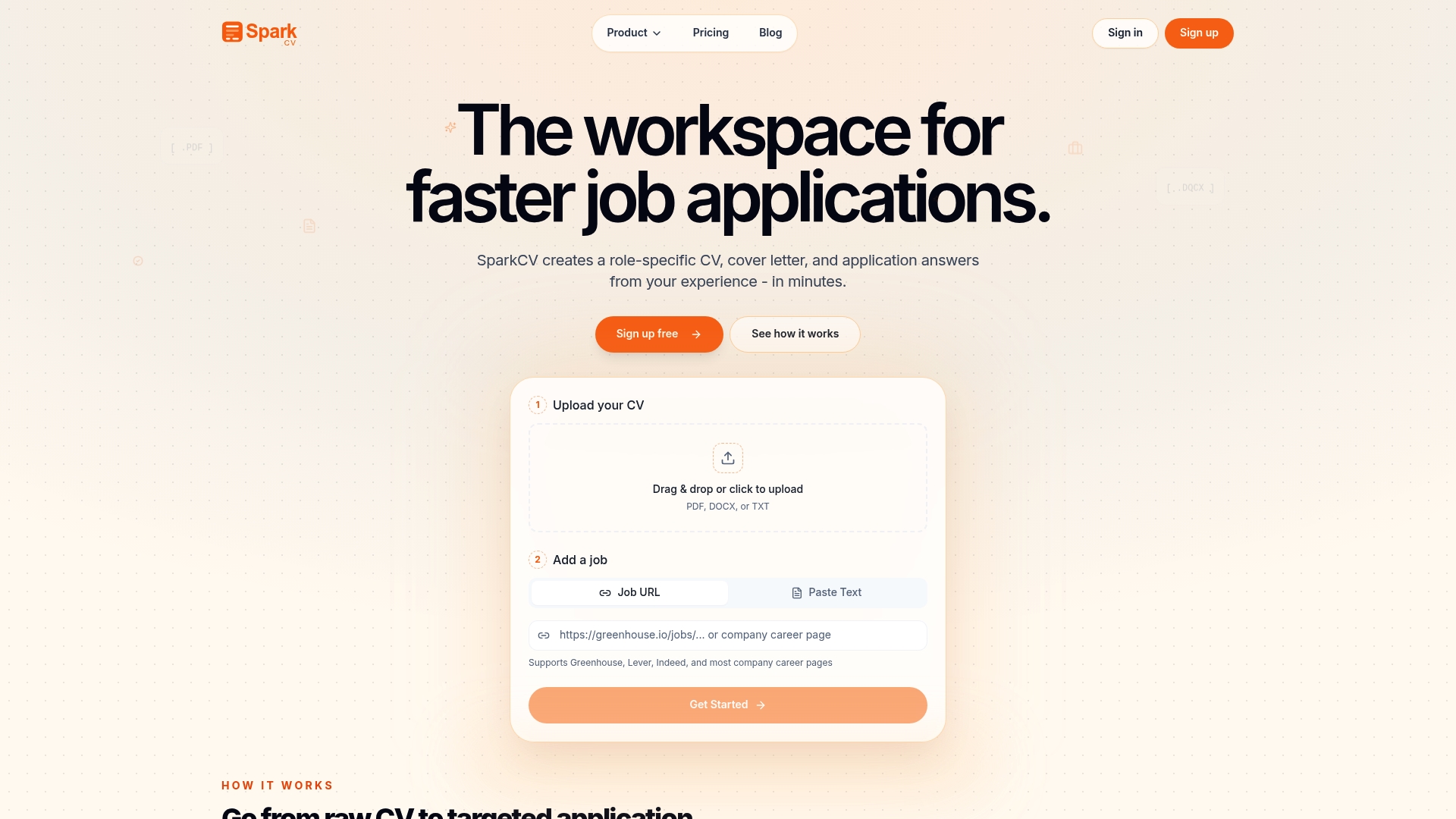
SparkCV analyses your existing CV alongside the job description and generates a tailored version in minutes. It identifies keyword gaps, aligns your language with the role’s requirements, and produces an ATS-friendly format that satisfies both exact matching and semantic scoring. You also get a tailored cover letter and answers to application questions. If you want your CV to rank higher on job boards without guessing, try SparkCV and see the difference a properly optimised application makes.
Key takeaways
Job boards rank candidates using a hybrid system that combines exact keyword matching with semantic analysis, so your CV must address both methods to achieve strong visibility.
| Point | Details |
|---|---|
| Hybrid indexing is standard | Most job boards combine BM25 keyword scoring with semantic embeddings to rank candidates. |
| Exact keywords still matter | Mirror the precise phrasing from job descriptions to satisfy literal keyword matching. |
| Semantic context boosts ranking | Write skills into achievement sentences, not just lists, to build a strong semantic profile. |
| Avoid keyword stuffing | Modern ATS platforms penalise dense keyword lists; contextual placement outperforms repetition. |
| CV structure affects parsing | Use standard headings and separate skills from experience to prevent centroid drift. |
FAQ
What does it mean for a job board to index a CV?
Indexing means the job board extracts text from your CV and stores it in a searchable database. ATS platforms build keyword indexes from this data, enabling recruiters to search and retrieve relevant candidates using Boolean queries or AI-driven matching.
Does keyword stuffing improve your CV ranking?
No. Keyword stuffing is penalised by AI-driven job boards, which favour contextually placed, meaningful terms over repeated exact matches. It can also trigger centroid drift in semantic engines, reducing your overall relevance score.
How many keywords should a CV include?
There is no fixed number, but each primary skill term should appear two to three times across your CV in natural context. Long-tail phrases and semantically related terms should be included where they genuinely reflect your experience.
Do all job boards use the same indexing method?
No. Composite fit scores vary by platform, with different weights applied to semantic similarity, keyword overlap, location, and salary. Tailoring your CV for each specific role remains the most reliable approach.
Does CV formatting affect keyword indexing?
Yes. Tables, text boxes, and graphics can prevent ATS parsers from reading your content. Plain text formatting with standard section headings gives your CV the best chance of being fully parsed and indexed.
Recommended reads
Keep exploring






Hear more from SparkCV
Leave your email for new articles, onboarding invites, and launch news.
We’ll only use this for SparkCV emails, and you can unsubscribe any time.