
Job application strategy: your 2026 guide to success

Most job seekers treat their search like a lottery. Send enough applications, and eventually one comes back. But applying broadly without tailoring is demonstrably ineffective and leads to frustration. The truth is, what is job application strategy really about? It is about focus, not volume. A well-built job application strategy defines where you apply, how you present yourself, and how you spend your time. Get it right, and you work smarter, get more interviews, and avoid the burnout that comes from months of scattergun effort.
Table of Contents
Key takeaways
| Point | Details |
|---|---|
| Quality beats quantity | Targeting fewer, well-matched roles produces better results than mass applying without tailoring. |
| Tailoring multiplies interview chances | A CV tailored to a specific role can increase interview rates by more than 10 times compared to a generic submission. |
| Timing matters more than most realise | Submitting within 48 hours of a job posting with genuine tailoring gives you a real edge. |
| Networking outperforms job boards | Networking has a 60 to 65% success rate, far above the 20 to 30% for job adverts. |
| A repeatable system sustains momentum | Building a weekly routine with clear goals prevents burnout and keeps your search progressing. |
What is job application strategy?
A job application strategy is a deliberate plan that governs how you identify, target, and apply for roles. It replaces guesswork with a repeatable process. Rather than reacting to every job posting you encounter, you make considered decisions about fit, timing, and presentation.
The most effective job search strategy rests on three pillars. First, you need clarity about the roles you are actually qualified for and genuinely want. Second, you need a method for tailoring your materials efficiently. Third, you need a way to track progress and adapt based on results.
-
Role targeting: Identify the specific titles, sectors, and organisations that match your skills and goals. Broad targeting wastes time and dilutes your message.
-
Modular materials: Build a master CV with all your experience documented. From that base, tailor efficiently for each role without rewriting from scratch.
-
Timing discipline: Submitting applications within 48 hours of a job posting consistently outperforms late or untailored submissions.
-
Process tracking: Use a spreadsheet or dedicated tool to monitor which roles you have applied for, follow-up dates, and outcomes.
Pro Tip: Set a target of three to five tailored applications per week rather than ten generic ones. This single shift dramatically changes your results and protects your energy.
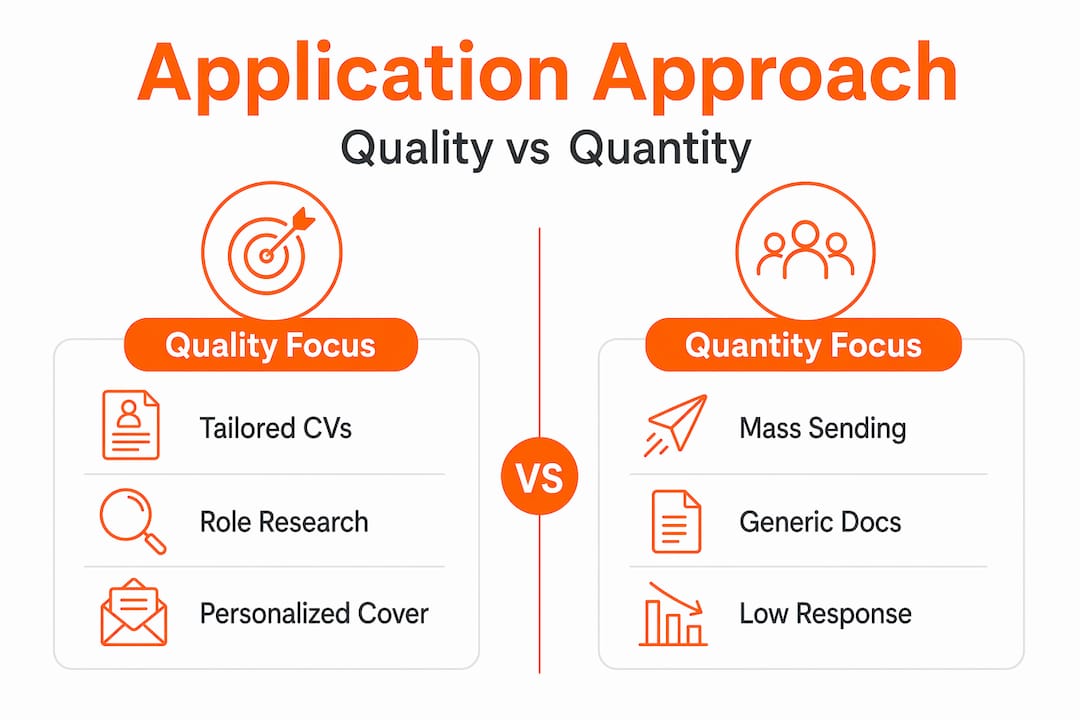
Random mass applications feel productive but rarely are. Candidates with fewer, tailored submissions consistently outperform those relying on volume. Start with the strategy, not the send button.
Tailoring your CV and cover letter effectively
This is where most job seekers lose ground. Tailoring does not mean fabricating experience. It means reframing genuine skills and achievements using the employer’s language. Here is a practical method:
-
Read the job description carefully. Identify the three to five core requirements and the specific language used. Note any recurring words or phrases. These become your keyword targets for both ATS systems and human readers.
-
Check for a three-layer match. Effective tailoring requires three layers: the job description itself, the company’s broader context (mission, recent news, culture), and where possible, the hiring manager’s known priorities.
-
Adjust your CV profile and bullet points. Lead with the experience most relevant to this role. Restructure bullet points to front-load the outcomes that match what the employer values. Do not invent. Reorder and reframe.
-
Write a targeted cover letter. Reference something specific about the company. Address a challenge they face and connect it to your experience. Generic cover letters are discarded instantly. A personalised cover letter increases your interview chances by 3.4 times.
-
Match the tone. A fintech scale-up communicates differently from a public sector organisation. Your application should feel like it belongs in their world.
One technique that experienced candidates use is the master CV. You document everything — every project, every responsibility, every achievement. From that master document, you draw out the most relevant sections for each application. This makes ATS-friendly formatting far quicker to achieve and protects consistency across materials.
Pro Tip: When reviewing a job description, paste it into a document and highlight every requirement in one colour and every value or cultural signal in another. This visual split makes your tailoring much faster and more precise.
AI and networking in your job search
Technology and relationships are both powerful parts of effective job application techniques, but neither replaces strategic thinking.
Using AI as a campaign manager
AI works best as a strategic partner rather than a content generator. The real value is in prioritising roles, identifying patterns in which applications progress, and keeping your search organised. Nearly 65% of applicants now use AI in their applications, yet recruiters detect AI-generated content quickly. The lesson: use AI to accelerate your process, but humanise everything before it goes out.
Networking is about building authentic relationships and trust over time, not making immediate job demands. The best opportunities often come from conversations started months before a role appears publicly.
Making networking work
Networking has a 60 to 65% success rate for finding roles, compared to just 20 to 30% for job boards. Yet most job seekers allocate the majority of their time to job boards. Rebalancing that split is one of the highest-return moves you can make.
-
Reconnect with former colleagues and managers. A short, genuine message asking for a catch-up costs very little and can open doors.
-
Engage with industry communities, whether in-person or online. Comment meaningfully on posts, join relevant groups, attend events.
-
When following up after networking conversations, lead with value. Share an article, offer an insight, acknowledge something they have achieved recently.
You do not need hundreds of contacts. You need a small network of people who know your work and would advocate for you.
Common pitfalls to avoid
Even well-intentioned job seekers make mistakes that quietly undermine their results. These are the most damaging:
-
Applying indiscriminately. Quality and focus define success in job searching, not volume. Chasing every posting depletes energy and produces weak applications.
-
Ignoring the application instructions. Many employers use instructions (upload as PDF, include a specific subject line, answer a screening question) as a first filter. Missing these signals a lack of attention.
-
Skipping follow-up. A brief, polite follow-up email five to seven days after applying keeps you visible without being pushy.
-
Neglecting interview preparation. Securing an interview is only half the job. Research the company, prepare specific examples, and review your own application before every interview.
Pro Tip: Use a simple spreadsheet to track every application: role, company, date submitted, follow-up date, and current status. When you can see your pipeline clearly, you make better decisions about where to focus next.
Building a repeatable job search system
Momentum matters. A job search that operates on bursts of intense effort followed by inactivity produces inconsistent results. A weekly system keeps you progressing without burning out.
| Activity | Recommended frequency | Goal |
|---|---|---|
| Tailored applications | 3 to 5 per week | Quality submissions with role-specific CVs |
| Networking outreach | 2 to 3 contacts per week | Genuine relationship building |
| Master CV update | Monthly or after new projects | Keep your base material current |
| Application tracking review | Weekly | Identify what to follow up and what to adjust |
| Market feedback review | Fortnightly | Refine targeting based on response rates |
The discipline of maintaining your master CV cannot be overstated. Update it whenever you complete a significant project, receive feedback, or develop a new skill. When you need to apply quickly, you will be glad you did. Combining this with tracking your applications systematically means you spend less time on admin and more time on the activities that actually produce interviews.
How SparkCV supports your job search
If creating a tailored CV for every application feels time-consuming, SparkCV removes most of that friction. SparkCV analyses your existing CV alongside the job description and generates a tailored, ATS-optimised CV in minutes. It handles keyword matching, structural adjustments, and cover letter drafting so you can focus on the applications that matter most.
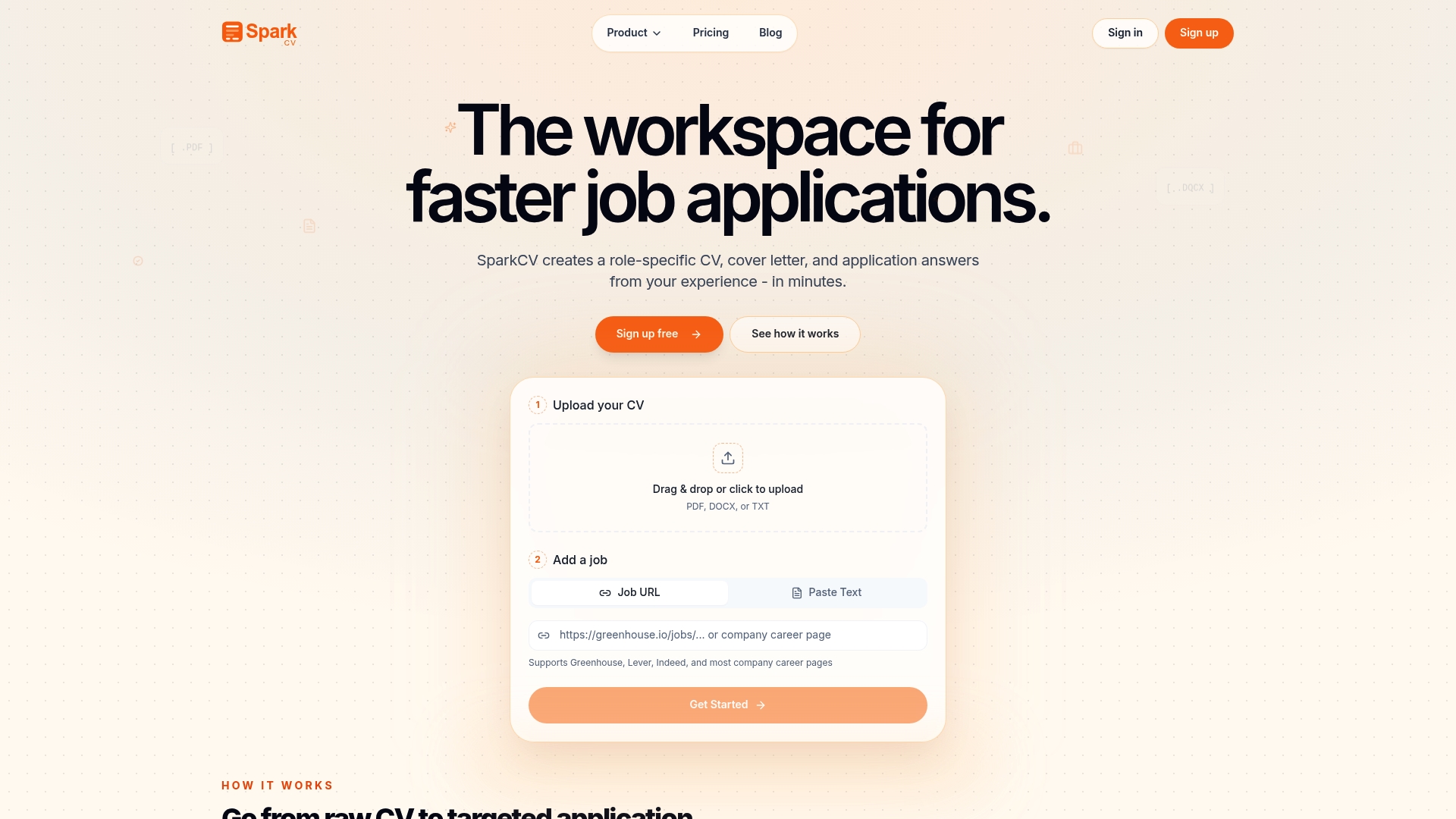
You can also use SparkCV to tackle application questions that typically take hours to answer well. Whether you are applying to one role or managing a structured weekly pipeline, SparkCV helps you maintain quality without sacrificing time. Sign up free and see how much faster a strategic approach becomes when the right tools are behind it.
FAQ
What is a job application strategy?
A job application strategy is a planned approach to identifying suitable roles, tailoring your materials, and managing your search systematically. It prioritises quality applications over volume to maximise interview chances.
How many jobs should I apply for each week?
Aiming for three to five well-tailored applications per week is more effective than sending large numbers of generic ones. This approach reduces burnout and produces stronger, more relevant submissions.
Does tailoring my CV actually make a difference?
Yes. A CV tailored to a specific job title can increase interview rates by 10.6 times compared to a generic CV. Personalised cover letters raise your chances by a further 3.4 times.
How important is networking in a job search?
Very important. Networking has a success rate of 60 to 65% for securing roles, compared to 20 to 30% for job boards. Building genuine relationships over time produces far better results than relying solely on advertised positions.
Should I use AI to write my job applications?
AI can accelerate parts of the process, but recruiters detect AI-generated content quickly. Use AI to help prioritise roles and draft materials, then personalise everything before submitting to make sure it reflects your genuine voice and experience.
Recommended reads
Keep exploring






Hear more from SparkCV
Leave your email for new articles, onboarding invites, and launch news.
We’ll only use this for SparkCV emails, and you can unsubscribe any time.