
Role of internship experience on your CV in 2026

Employers are not just scanning for degrees. Internship demand rose by 3.9% in 2026, and 73% of employers plan to convert interns directly into full-time hires. That makes the role of internship experience on your CV far more significant than many graduates realise. Yet most CVs either bury internship roles or describe them so vaguely that recruiters skip straight past them. This guide shows you exactly how to present your internship experience to make it count, from where it sits on the page to how each bullet point should read.
Table of Contents
Key takeaways
| Point | Details |
|---|---|
| Internships signal more than tasks | They demonstrate motivation, work ethic, and readiness to contribute from day one. |
| Placement and phrasing matter | Position internships prominently and write achievement-led bullet points, not task lists. |
| All internships count | Unpaid or short placements still carry weight when framed around transferable skills. |
| Tailor every description | Match your internship bullet points to the specific language and requirements of each role. |
| Non-traditional experience qualifies | Freelance projects and volunteering can substitute when traditional internships are absent. |
Why internship experience matters on your CV
Internship experience does something a degree alone cannot. It proves you can apply knowledge in a real working environment. Recruiters know this, which is why the impact of internship experience on hiring decisions is so well documented.
Research published in 2026 by Springer Nature found that graduates with internships receive more interviews, land better-aligned roles, and earn higher salaries in their first year than peers without them. Lower unemployment rates in that critical first year after graduation were also recorded. These are not small margins. They represent a genuine gap between candidates who look ready and those who look like a risk.
There is also a signalling effect at play. A landmark experimental hiring study by Nunley et al. found that internships on a CV signal motivation, work ethic, and the ability to function in a professional setting. None of those qualities show up in a grade or a module list. They show up through experience.
Consider the comparison below:
| Outcome | Graduates with internship experience | Graduates without |
|---|---|---|
| Interview success rate | Noticeably higher | Lower |
| Salary in first role | Higher, particularly for paid internships | Lower on average |
| Job-to-degree alignment | Stronger | Weaker |
| First-year unemployment risk | Lower | Higher |
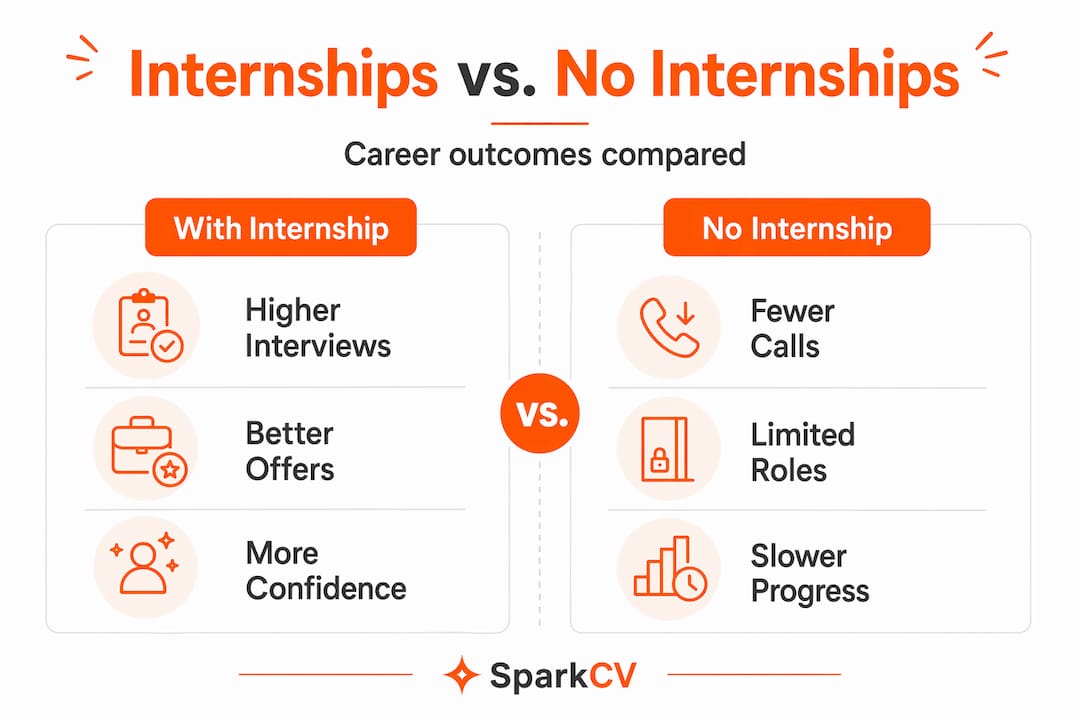
The table tells a clear story. The value of practical internships is not theoretical. It translates directly into career outcomes that matter to you right now.
It is also worth noting that paid internships correlate with the strongest salary outcomes, both immediately and years after graduation. That said, even unpaid placements carry real weight on a CV when presented correctly, which brings us to how you actually do that.
How to present internship experience effectively
Structure is everything. Recruiters spend just 6 to 8 seconds scanning a CV before deciding whether to read further. If your internship experience is buried beneath a wall of academic modules or described in a single vague sentence, those seconds are wasted.
Follow these internship experience CV best practices to present your roles with real impact:
-
Use a clear job title and date range. Write “Marketing Intern, June to September 2025” rather than “Work experience.” Specificity signals professionalism.
-
Lead with achievements, not duties. “Supported the team” tells a recruiter nothing. “Drafted social media content that increased engagement by 22% over eight weeks” tells them you delivered results.
-
Highlight transferable skills explicitly. Communication, project management, data analysis, and client liaison all belong in your bullet points if you used them. Soft skills from internships are often the deciding factor for entry-level roles.
-
Quantify wherever possible. Numbers give context. If you processed 50 orders a day, managed a £2,000 budget, or reduced a process from three steps to one, say so.
-
Tailor descriptions to the role you are applying for. Recruiters in skills-based hiring environments, and nearly 70% of employers have now shifted to that model, are looking for specific capabilities. Mirror the language from the job description.
Pro Tip: Keep your CV to a single or double column layout. Overly complex CV designs frequently fail to parse correctly in applicant tracking systems, meaning your experience never gets seen at all.
Your internship section should sit within your work experience section, not in a separate category labelled “extra experience.” Treat it as real employment because, for a recruiter, it is.
Common mistakes that weaken your internship section
Even candidates with genuinely strong placements can undermine their CVs through avoidable errors. Here are the most common ones, and what to do instead:
-
Vague descriptions. Phrases like “assisted with various tasks” or “helped the marketing department” provide zero evidence of skill. Replace them with specific contributions and outcomes.
-
Dismissing unpaid or short placements. A two-week placement at a law firm still demonstrates initiative and professional exposure. Framing all experience through transferable skills and tangible outcomes boosts recruiter appeal regardless of duration or pay.
-
Ignoring the job description. Writing a single version of your CV and sending it to every employer is one of the fastest ways to get rejected. Each internship description should reflect the priorities of the role you are targeting. See why CVs get rejected before they are read for a sharper picture of what this costs you.
-
Cluttered or non-ATS formatting. Tables, graphics, and multi-column designs look appealing but can confuse automated screening systems. Clean, single-column formatting is the safest choice.
-
No experience at all. If you genuinely lack traditional placements, non-traditional experiences such as freelance projects, open source contributions, and volunteer work can substitute effectively by demonstrating initiative and practical ability.
Pro Tip: If you are short on traditional internship experience, a clearly structured personal project with measurable outcomes can carry similar weight to a short placement, provided you frame it as work rather than a hobby.
Strong versus weak: internship descriptions compared
The difference between a CV that gets a callback and one that does not often comes down to a handful of words per bullet point. Here are two versions of the same internship described very differently:
Weak example:
Assisted the finance team with various administrative duties and attended meetings.
Strong example:
Prepared weekly expense reports for a team of 12 using Excel, reducing processing time by 30%. Attended and took minutes for three senior stakeholder meetings, producing summaries circulated to department heads.
The second version tells a recruiter what you did, how you did it, who benefited, and what the outcome was. The first is forgettable.
| Element | Weak version | Strong version |
|---|---|---|
| Specificity | Generic task list | Named tools, team size, frequency |
| Evidence of impact | None | Percentage improvement given |
| Transferable skills | Implied only | Explicitly stated |
| ATS keyword relevance | Low | High, mirrors job description language |
| Recruiter impression | Passive contributor | Active, results-oriented candidate |
The strongest descriptions use active verbs (prepared, produced, managed, delivered) and ground every claim in something measurable. Even if you cannot give a percentage, you can give a number, a timeframe, or a named outcome.
Make your internship experience work harder with SparkCV
If tailoring your internship descriptions for every application feels time-consuming, SparkCV can help you do it in minutes.
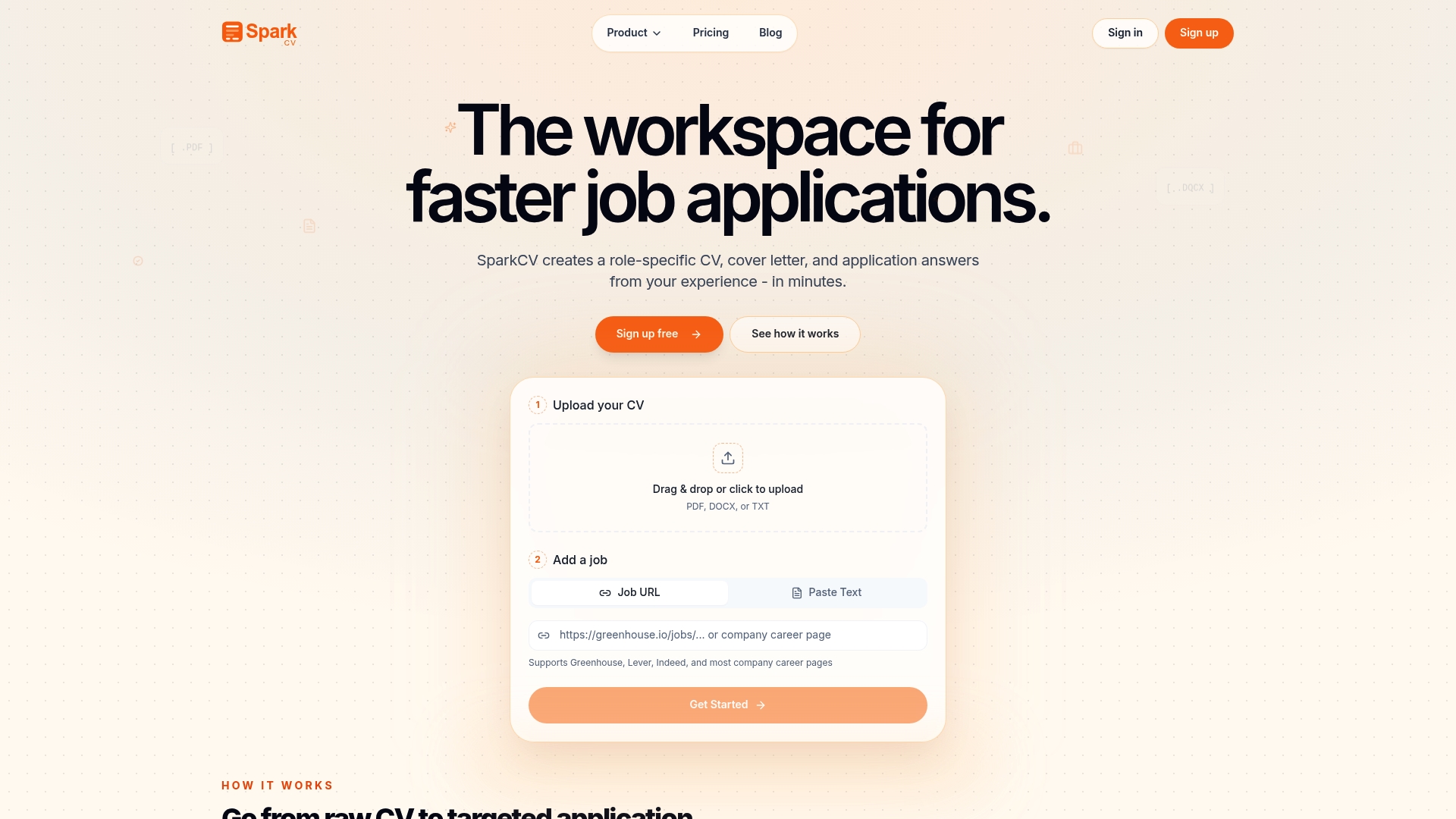
SparkCV’s AI CV tools analyse your existing CV alongside the job description and generate a tailored version that highlights the skills and experiences most relevant to that specific role. That means your internship bullet points are automatically aligned with what the employer is actually looking for, including ATS-relevant keywords. No more guessing whether your CV reads right for a particular job. SparkCV takes care of the keyword matching and structure so you can focus on applying. Sign up free and see how your internship experience can be repositioned to land more interviews.
FAQ
Why does internship experience matter so much on a CV?
Internship experience signals to employers that you have applied skills in a real workplace. Research shows that graduates with internships secure more interviews, better-aligned roles, and higher starting salaries than those without.
Where should internship experience sit on a CV?
Place it within your main work experience section, with a clear job title, employer name, and date range. Do not separate it into a secondary category, as this can reduce its perceived significance.
How do I present an unpaid or short internship positively?
Focus on the transferable skills you used and any measurable outcomes you contributed to. Framing all experience through skills and outcomes gives even brief placements genuine CV value.
What if I have no formal internship experience?
Non-traditional experiences such as freelance projects, volunteering, or open source contributions can demonstrate practical ability and initiative when framed as structured work with clear outcomes.
How do I tailor internship descriptions for different jobs?
Read the job description carefully and mirror the skills and language it uses in your bullet points. SparkCV can automate this process by matching your CV content to each role’s specific requirements.
Recommended reads
Keep exploring






Hear more from SparkCV
Leave your email for new articles, onboarding invites, and launch news.
We’ll only use this for SparkCV emails, and you can unsubscribe any time.